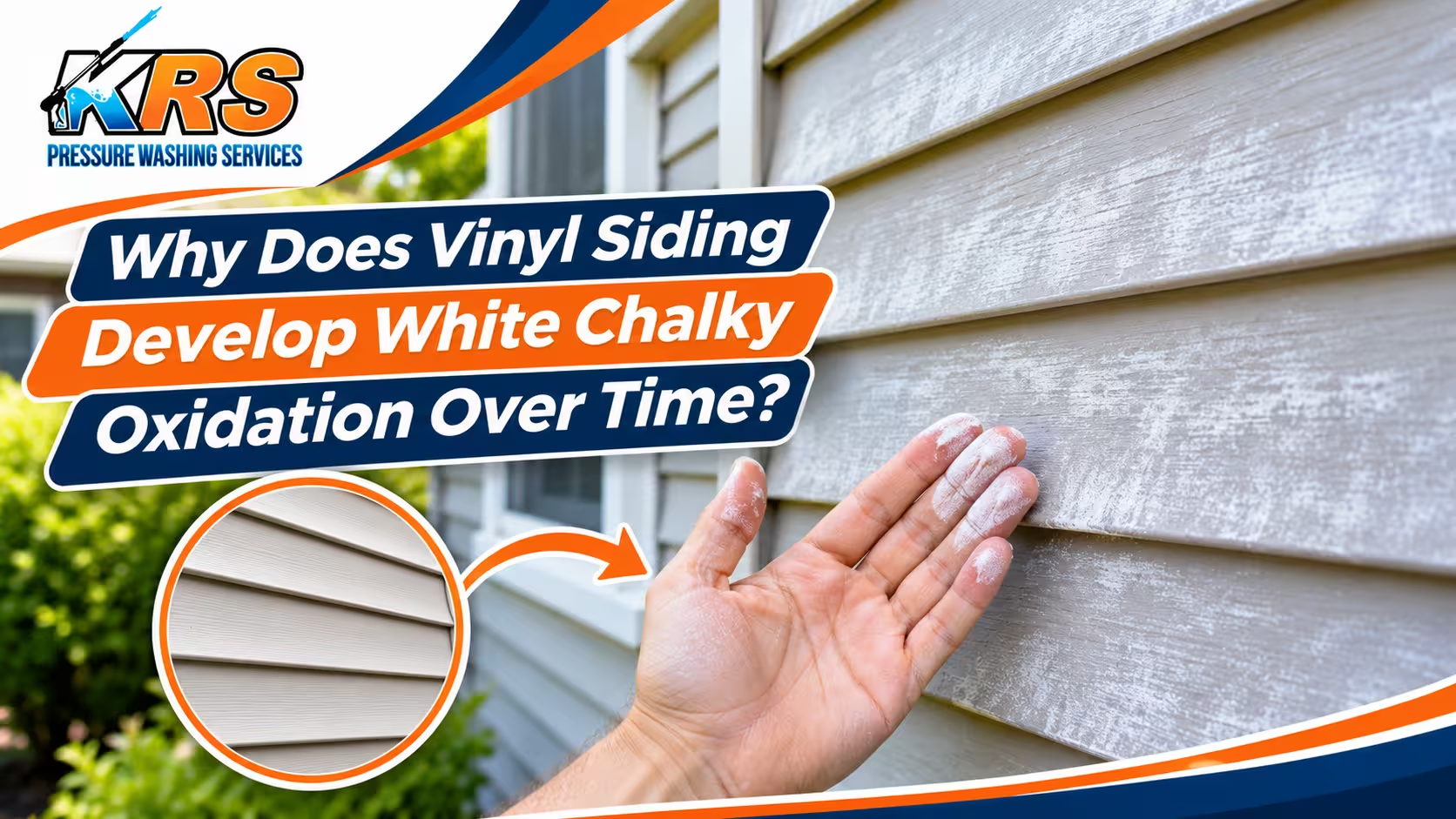
A homeowner wipes a hand across faded vinyl siding and finds a fine white powder on their fingers. The wall may still be free of obvious dirt, yet its original color looks dull, especially where afternoon sunlight hits it. That powder can be a sign of surface weathering, not a layer of dust that ordinary rain will wash away.
Vinyl siding oxidation develops as the exterior finish is exposed to sunlight, heat, oxygen, and changing weather over many years. Loose chalk can often be cleaned away, but cleaning cannot reverse every color change or rebuild a degraded finish. Understanding that difference helps homeowners choose the right cleaning approach without creating patchy marks or damaging otherwise serviceable panels.
What Is the White Chalk on Vinyl Siding?
Vinyl siding is made primarily from polyvinyl chloride, or PVC, combined with pigments and other ingredients that help it withstand outdoor conditions. As the exposed surface weathers, some material can become loose enough to leave a pale, powdery residue. Siding manufacturers describe this chalk accumulation as a condition that can occur on pigmented exterior products exposed to the elements, rather than automatic proof that the wall has failed.
Why Do Sunlight and Weather Cause the Surface to Fade?
Ultraviolet radiation drives chemical changes in exposed polymers, while heat, rain, wind, and pollutants contribute to long-term weathering. Siding formulations contain stabilizers and pigments intended to slow those changes, not eliminate weather exposure entirely. Research published by the National Institute of Standards and Technology found that different vinyl formulations can behave differently during weathering, including changes in color, gloss, and material performance.
How Can You Tell Oxidation From Dirt, Algae, or Mineral Residue?
The key question is whether the discoloration comes from the material itself or something deposited on it. Dirt tends to collect under ledges and near traffic, algae often appears green in persistently damp spots, and mineral residue can follow runoff paths. Oxidation more often produces a widespread dull or powdery look on weather-exposed siding, although multiple conditions can occur on one wall at the same time.
A small, dry finger-wipe test can provide a clue: gently rub an accessible area of siding and check whether pale powder transfers to your skin or a soft cloth. This is not a laboratory diagnosis, and some environmental deposits can also transfer. Avoid climbing ladders or using abrasive pads just to perform the test. Compare a sunny wall with a sheltered section and photograph the difference in consistent daylight.
Why Does Oxidation Sometimes Become Obvious After House Washing?
Washing removes grime that previously disguised a faded finish. It can also lift some chalk more effectively than other areas, making uneven weathering stand out after the wall dries. A homeowner may think the cleaning caused all the discoloration, even though the panel surface was already changing. The pattern matters: irregular pale trails following a spray path are different from a consistently faded wall that has been exposed to sunlight for years.
Aggressive washing can make that contrast worse. A concentrated spray, stiff brush, or incompatible cleaner may disturb weathered material unevenly, change the siding’s gloss, or drive water behind panel overlaps. If the color looks patchy after cleaning, do not automatically repeat the job at higher pressure. First compare the dry panels and determine whether the remaining marks are surface residue, pre-existing fading, or damage from the method used.
Can Normal House Washing Remove the Chalky Layer?
Often, yes. CertainTeed recommends gentle washing with soapy water, a soft-bristle brush, and a garden hose for soil, grime, and chalk on its vinyl siding. This can reduce loose surface residue and make the wall look more uniform. It does not guarantee that the original color or sheen will return, particularly when sunlight has already changed the outer finish. Follow the actual siding manufacturer’s care instructions whenever available.
The distinction is important when arranging house washing. Routine washing addresses buildup on siding, while persistent oxidation may need a separate surface assessment and carefully tested approach. KRS Pressure Washing describes a low-pressure soft-washing service for delicate home exteriors and mentions chalky film among the visible signs homeowners notice. That service description alone should not be read as a guarantee of full color restoration.
What Is a Careful Cleaning Process for Oxidized Vinyl?
Start by identifying the siding brand, age if known, and any warranty or maintenance instructions. Inspect accessible panels for cracks, loose sections, openings, or brittle edges that make washing more risky. Protect nearby plants and finishes, then test an inconspicuous section with an approved mild cleaner. Let it dry before judging the result. A successful test should remove loose residue without changing the surface’s gloss or producing obvious streaks.
Use a soft brush or cloth and gentle rinsing where the manufacturer permits it. Work in manageable sections, avoid abrasive scrubbing, and prevent cleaner from drying on the wall. CertainTeed’s published instructions describe washing from the bottom upward to reduce streaks, followed by a thorough clean-water rinse. A different brand may have different requirements, so product-specific guidance takes priority over a universal online recipe or pressure setting.
If chalk remains after gentle washing, contact the siding manufacturer or a suitable cleaning professional before trying a stronger oxidation remover. Products sold for other surfaces may contain solvents or aggressive ingredients that discolor PVC or affect surrounding materials. Test any approved product first and follow its label exactly. Cleaning chemicals should never be mixed casually, and the goal should be a controlled result rather than removing material at any cost.
Why Isn’t Soft Washing Always the Same as Oxidation Removal?
Soft washing generally uses controlled, low-pressure application with a cleaning solution to loosen surface contaminants. It can work well for dirt or biological growth when the chemistry is compatible with the siding. Oxidation is different because the chalk may come from the siding’s weathered finish itself. A solution that removes algae is not automatically suitable for lifting chalk, and it cannot reconstruct lost pigment.
If a wall has both green growth and white chalk, separate the two problems before choosing treatment. The existing guide to removing mold and algae from exterior surfaces explains the role of suitable solutions and gentler methods for organic buildup. For an oxidized panel, the additional question is how much of the faded surface can be cleaned without leaving uneven color or gloss.
What Cleaning Methods Can Make Chalky Siding Look Worse?
Using maximum pressure, aiming upward beneath siding laps, and scrubbing with stiff or abrasive tools are avoidable mistakes. Manufacturers warn that aggressive methods can alter gloss, create splotchy sections, or force water behind the panels. This is especially concerning around windows, vents, electrical fixtures, and damaged seams. Lower pressure is not a magic safety guarantee if the cleaner or spray angle is still unsuitable.
These risks are part of the wider problem of pressure washing damage to a home, where a method appropriate for concrete may be wrong for older siding. Before washing, ask how the contractor will identify oxidation, test the solution, protect nearby materials, and handle existing wear. A reasonable provider should be willing to explain the limitations rather than promising to blast the powder away.
Can Oxidized Vinyl Siding Be Restored Without Replacement?
Sometimes the appearance improves substantially once loose chalk and surface dirt are removed, especially when the siding still has sound color beneath the film. Other panels remain faded because their outer finish has permanently weathered. Special restoration products or coatings may be advertised for such cases, but suitability depends on the siding, its condition, manufacturer restrictions, and whether the result will weather evenly over time.
Consider professional siding evaluation when panels are cracked, warped, brittle, repeatedly discolored, or no longer fitting properly. Cosmetic chalking alone does not prove replacement is necessary, and washing alone will not correct structural or installation defects. If painting is being considered, use a coating system specifically approved for the siding and confirm any color, temperature, or warranty restrictions before work begins.
How Can Homeowners Slow Future Discoloration?
You cannot eliminate ultraviolet exposure, but you can avoid accelerating visible wear through improper maintenance. Follow manufacturer cleaning guidance, remove dirt before it becomes heavily embedded, and inspect siding after severe weather. Keep sprinklers from repeatedly spraying walls, trim vegetation that traps moisture, and have damaged panels addressed rather than trying to hide cracks with cleaners. Routine upkeep helps appearance but cannot stop normal material aging.
When Should You Call a House Washing Professional?
A professional assessment makes sense when chalk covers large walls, prior cleaning left streaks, the siding finish is unfamiliar, or elevated sections cannot be accessed safely. Ask for a small test and a realistic explanation of what cleaning can achieve. KRS Pressure Washing Services offers house washing in Burlington, KY, using lower-pressure methods for delicate exteriors; confirm whether an oxidation-specific treatment is appropriate for your siding before scheduling.
Frequently Asked Questions
Does White Powder on Vinyl Siding Mean It Needs Replacing?
No. Some chalking is a normal sign of weathering on pigmented exterior materials. Check for cracking, brittleness, warping, or loose panels separately. If the siding remains sound, gentle cleaning may improve its appearance without replacement.
Can Soft Washing Completely Remove Vinyl Siding Oxidation?
Soft washing may remove loose chalk and other buildup, but it cannot reverse permanent pigment fading or restore degraded PVC. Results depend on the condition and formulation of the panels. Test a small section before promising complete removal.
Why Does My Siding Look Whiter After Being Cleaned?
Cleaning can reveal existing fading or remove chalk unevenly, leaving noticeable pale patches after the wall dries. Incompatible chemicals or aggressive spraying may also change gloss. Review the cleaning method before repeating it or using stronger products.
Is High-Pressure Washing Safe for Oxidized Vinyl Siding?
Not automatically. Some manufacturers advise against power washing because of water intrusion, damage, and discoloration risks. Follow the siding brand’s instructions and favor gentle methods. Avoid directing water upward into laps, seams, and openings.
How Often Should Chalky Vinyl Siding Be Cleaned?
Check the manufacturer’s recommendations rather than using a fixed aggressive-washing schedule. CertainTeed suggests washing vinyl siding at least annually for appearance. If chalk returns, gentle maintenance can help with residue, but frequent washing will not stop weathering.
Protect the Finish Before Trying to Restore the Color
White chalky residue does not always mean a vinyl-sided home needs major repairs. The right response is to identify surface weathering, distinguish it from dirt or algae, and test a cleaning method that respects the siding’s finish. For house washing questions in Burlington, KY, contact KRS Pressure Washing or call (859) 300-1586. Describe the chalking and any earlier cleaning attempts so the team can discuss appropriate options.