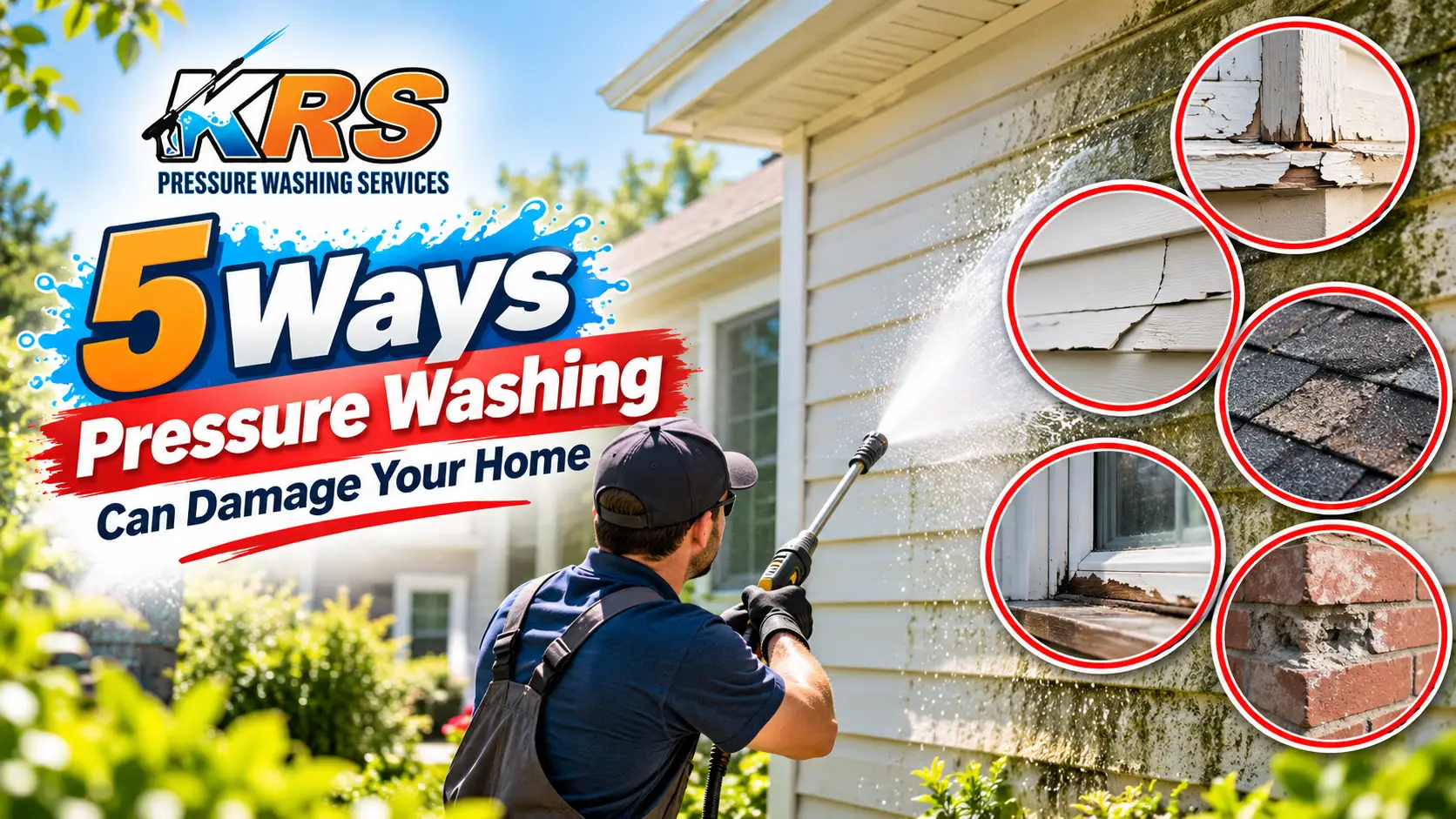
Pressure washing looks harmless. You point, you spray, and years of grime disappear. But the ways pressure washing can damage your home are easy to underestimate, because much of the harm is hidden inside walls, behind window trim, or on a roof you can’t see from the ground.
This guide covers five common types of damage, how to tell whether it has already happened, and how to get a clean exterior without paying for repairs later.
Why a Home Is So Easy to Hurt
A home’s exterior is designed to shed rain that falls from above, not a concentrated jet from a foot away. Even a modest machine delivers far more force than a garden hose, and the difference between a clean wall and a damaged one usually comes down to high water pressure, incorrect distance, and an improper nozzle.
Local conditions add temptation. In Cincinnati, OH, humid summers fuel algae and mildew on shaded walls, and blasting them off can feel like the obvious fix. That’s where many of the problems below begin.
1. Cracked, Gouged, or Eroded Surfaces
The most visible form of pressure washing damage is physical. The stream can cut into a surface faster than most people expect.
Wood is especially vulnerable. Softwoods like cedar and pine can fuzz, splinter, or gouge under strong pressure, and once the fibers are torn up the damage is permanent and needs sanding or replacement. Many guides suggest staying far below 1,500 PSI on wood, and some recommend as low as 400 to 800 PSI for siding.
Vinyl is tougher but not immune. Older or cold vinyl can crack, and heavy pressure can remove chalky oxidation unevenly, leaving streaks that don’t fade. Masonry isn’t safe from it either: aging mortar is often soft, and a strong spray can pull it out of the joints and cut into old brick, which opens the wall to weather.
2. Water Forced Behind Siding and Into the Walls
This is the damage homeowners rarely see until much later. Siding panels overlap so that water runs down and out. Spray upward or against those laps, and water intrusion follows, soaking the house wrap, sheathing, and sometimes the insulation behind them.
Because the water is trapped, it dries slowly. That sets up conditions for mold, rot, and wet insulation, all hidden behind a wall that looks freshly cleaned. Painting or caulking soon afterward makes it worse, since the moisture gets sealed in. Let walls dry fully before any coating goes on, and always spray downward and with the direction of the laps.
3. Stripped Paint and Damaged Finishes
Pressure can remove more than dirt. On painted siding it lifts the coating, leaving peeling paint, bare patches, and exposed wood that weathers fast. On stained wood it can strip the finish and raise the grain. Even washing close to chipped paint tends to widen the damage rather than clean around it.
Older homes carry an extra concern. Homes built before 1978 may contain lead-based paint, and the EPA notes that roughly three-quarters of those homes still do. Blasting loose paint can scatter chips and dust into the soil around the house. If your house falls in that age range, avoid high pressure on flaking paint and check current local rules before any work.
4. Broken Window Seals, Damaged Caulking, and Cracked Glass
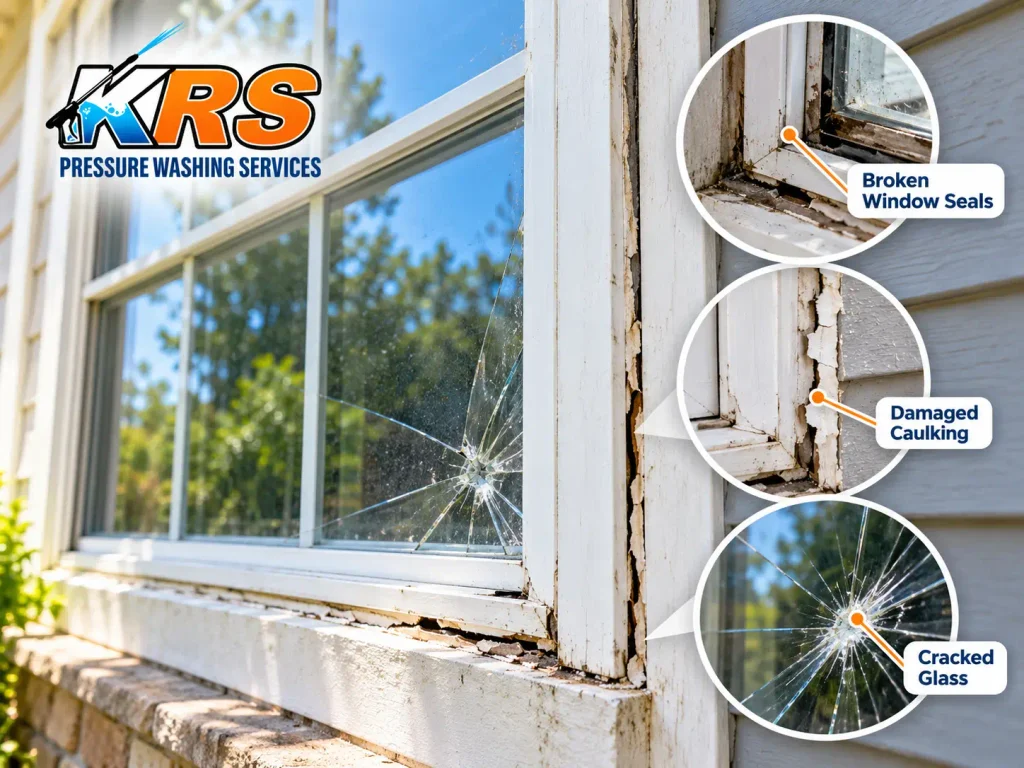
Windows rely on seals and caulk that are built to resist wind-driven rain, not a close-range jet. Hit them with a pressure washer and damaged caulking can tear, loosen, or pull away from the frame. Double-pane units are at risk too: broken seals let moisture between the panes, which shows up as permanent fogging, and the unit usually needs replacing.
Even if you aren’t aiming at the glass, spraying siding right next to a window can push water into the gap between frame and trim. Old or cracked glass can break from direct spray, and screens can tear. Remove screens first, keep the stream angled away from the frame, and fix failing caulk before washing, not after.
5. Damaged Roofs and Electrical Components
Two of the most fragile areas are also the easiest to overlook.
Roofs. Asphalt shingles are covered in mineral granules that shield the asphalt from sunlight. High-pressure water knocks those granules loose, which can shorten the roof’s life and push water under the laps. Roofing industry guidance and many manufacturers caution against pressure washing shingles, and damage from it may not be covered by a warranty. Low-pressure methods are the usual recommendation for algae. If you’re considering roof cleaning, ask how the company protects the shingles.
Electrical parts. Outdoor outlets, light fixtures, and the meter or service entrance can handle rain, but a pressurized spray can force water past seals and into wiring, causing shorts or failure. Keep the nozzle away from them, don’t wash near overhead service lines, and use a GFCI-protected outlet with electric machines.
How to Tell Damage Has Already Happened
Some damage announces itself, but much of it doesn’t. Look for:
- Musty smells, or stains and bubbling paint on interior walls near exterior walls and windows
- Soft, swollen, or splintered wood, or stains that appear after washing
- Fogging between window panes, or gaps and missing caulk around frames
- Bald spots on the roof, or loose granules collecting in gutters and downspouts
- Tripped GFCI outlets or flickering outdoor lights after a wash
If several of these show up soon after a wash, have the area inspected before the moisture has time to spread.
What Safe Pressure Washing Looks Like
Safe pressure washing isn’t about owning a bigger machine. It’s about restraint:
- Use the lowest pressure that does the job, and test a hidden spot first.
- Choose a wide fan tip, never a zero-degree tip, and keep a steady distance.
- Spray downward and with the siding’s laps, not up into them.
- Repair cracks, loose panels, and failing caulk before you start.
- Check the siding and roofing manufacturer’s care instructions, since some prohibit pressure washing or tie warranties to the method.
- Treat roofs, windows, and electrical parts as no-blast zones.
For siding that’s mostly dirty or organic growth, a lower-pressure approach with the right cleaner often works better than force. A house washing service built around that approach takes much of the guesswork out.
When to Hire a Professional
Signs you should skip DIY
Pressure washing is a poor DIY project when the house has two stories, older paint, soft mortar, or a shingle roof, or when walls sit close to windows and the electrical service. Heavy growth that needs more than a rinse is another sign. This guide to when to hire a house washing company walks through the decision in more detail.
What to expect from a local professional
KRS Pressure Washing serves Cincinnati and communities across Northern Kentucky. Whichever company you consider, ask what pressure it uses on each surface, how it protects windows, outlets, and plants, and whether it carries insurance. Professional equipment only helps when the person using it chooses the right setting.
Frequently Asked Questions
Can pressure washing damage vinyl siding?
Yes. Older or cold vinyl can crack, oxidized panels can streak, and any siding can let water in if the spray angle is wrong. Following the manufacturer’s guidance and keeping pressure low reduces the risk.
Is soft washing safer than pressure washing?
Generally, because it relies on low pressure and cleaning solutions instead of force. It still needs care: the solution strength matters, plants need protection, and a patch test is smart on painted surfaces.
Will a warranty or insurance cover damage from pressure washing?
Not necessarily. Some manufacturers, especially for asphalt shingles, exclude damage from improper cleaning, and homeowners’ policies vary. Check your warranty and policy, and ask a contractor about its insurance before work starts.
Next Step
The common thread in all five problems is too much force, applied in the wrong place or at the wrong angle. If your home has delicate materials, older paint, or a roof you’d rather not risk, it’s worth talking to someone who does this daily. To discuss professional pressure washing in Cincinnati, OH, you can request a quote or call (859) 300-1586.