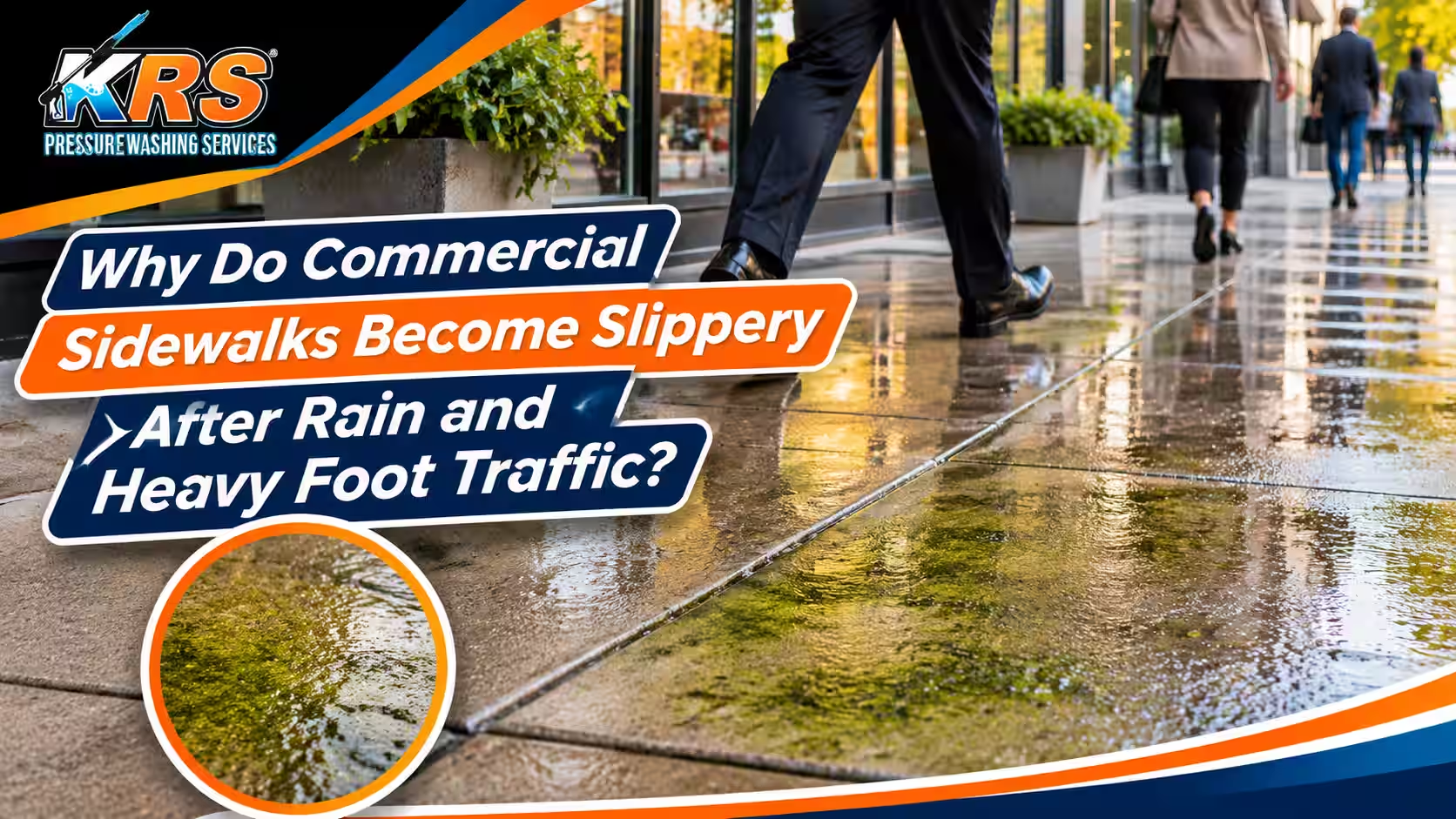
The sidewalk outside a busy restaurant may look clean during the afternoon, yet become noticeably slippery after an evening rain. Dark patches near the entrance, greasy marks beside a delivery door, and puddles along the curb can make the same walking route difficult to navigate. Even where no obvious stains are present, the concrete may have lost some of its original surface texture.
Slippery commercial sidewalks usually develop when rainwater interacts with accumulated contaminants, surface wear, or drainage problems. Algae, grease, tracked-in dirt, and food residue can interfere with the contact between footwear and concrete. Professional cleaning can address many of these problems, but recurring wetness and damaged pavement may require additional corrective work.
Why Does Rain Make Some Commercial Sidewalks More Slippery Than Others?
Concrete provides traction through the interaction between its surface and the soles of pedestrians’ shoes. When rainwater forms a film across the pavement, that interaction changes. The effect becomes more noticeable when dirt, grease, or biological growth is already present. A sidewalk that offers adequate grip when dry may behave differently when wet, particularly around heavily used entrances.
Surface texture also matters, although rougher concrete does not automatically provide better traction in every situation. Research on concrete walkway finishes found that friction performance changes under different contamination conditions. The type of surface, contaminants, footwear, and moisture all contribute to walking safety. This explains why two sidewalks exposed to the same rainfall can have noticeably different conditions.
How Do Algae and Biofilm Make Concrete Walkways Slippery?
Why Organic Growth Develops on Commercial Concrete
Algae and other microorganisms tend to develop on exterior concrete that remains damp. Shaded sidewalks, areas beneath overhanging vegetation, and walkways receiving frequent sprinkler overspray may provide favorable conditions. Over time, microorganisms can form a surface layer known as biofilm, which can become particularly slippery when wet.
Dark green, brown, or black patches may indicate organic buildup, although color alone cannot identify the contaminant. The growth may concentrate along building walls, near drainage outlets, or in sections that receive little direct sunlight. A sidewalk can also appear relatively clean while retaining a thin film that becomes noticeable only after rainfall.
Why the Same Slippery Patches Keep Returning
Washing away visible growth does not necessarily eliminate the conditions that allowed it to develop. A leaking irrigation line, poor drainage, or persistent shade can keep the concrete damp for extended periods. If the same location repeatedly becomes dark and slippery, maintenance should include identifying and addressing the moisture source.
Suitable cleaning can remove existing organic contamination, but prevention requires monitoring the affected surface. The methods used for removing mold and algae from exterior surfaces vary according to the material and condition. Commercial walkways may require a different schedule and additional precautions because pedestrians use them throughout the day.
How Does Heavy Foot Traffic Contribute to Slippery Sidewalks?
Commercial sidewalks collect contamination from more sources than rainfall alone. Customers and employees track soil, road residue, food particles, and moisture across entrances. Delivery carts may carry residue from loading areas, while outdoor dining spaces experience occasional food and drink spills. As people travel repeatedly along the same route, material can spread beyond the original contaminated area.
Foot traffic may also contribute to gradual surface wear. Frequently used walking paths can develop different textures from sections closer to the building or landscaping. Rain makes these differences more important, especially when the surface also contains oily residue. The number of pedestrians alone does not determine slipperiness; the condition of the walkway and the materials transferred onto it are equally important.
Why Are Grease and Oil Particularly Concerning Around Commercial Entrances?
Restaurants, loading docks, dumpsters, and food-service entrances may experience grease contamination that requires more than routine sweeping. Small spills can spread under shoes or equipment wheels, leaving a thin layer on concrete. When rainwater reaches the area, the resulting surface may become difficult to walk across even if the stain is not especially noticeable.
Oil and grease also behave differently from ordinary dirt. Water alone may move some contamination without adequately removing it, potentially spreading residue across a larger section. Appropriate absorbents and cleaning methods should be selected for the substance involved. Commercial grease cleanup must also account for wastewater disposal because contaminants should not simply be rinsed into nearby storm drains.
How Can Poor Drainage Make Sidewalk Slip Hazards Worse?
A sidewalk that stays wet after nearby pavement has dried may have a drainage issue. Sunken concrete, blocked catch basins, leaking gutters, and poorly directed downspouts can concentrate runoff in pedestrian routes. Repeated moisture exposure allows organic growth to persist and increases the time people spend walking on wet surfaces.
Inspect the sidewalk during rainfall when conditions permit, or immediately afterward from a safe location. Note where water enters the walkway, follows a channel, and collects. Persistent puddles near doorways or curb ramps may indicate that cleaning alone will not resolve the problem. A pavement or drainage specialist may need to evaluate settlement, surface slope, or damaged drainage infrastructure.
Can Worn or Smooth Concrete Remain Slippery After Cleaning?
Yes. A professionally cleaned sidewalk can still present traction concerns when its surface texture has changed or an unsuitable coating remains. Older concrete may contain smooth patches, previous repairs, worn traffic lanes, or polished areas. Some decorative coatings also perform differently under wet conditions.
Surface appearance is not a reliable substitute for assessing slip resistance. A clean, attractive walkway may still need evaluation when incidents or complaints recur. If the pavement remains slippery after contamination has been removed, a qualified specialist can determine whether its finish, coating, slope, or physical condition requires attention. Cleaning should not be presented as a substitute for repairing defective pavement.
How Can Property Managers Identify the Main Cause?
The pattern of contamination often provides the first clue. Dark staining in a shaded corner suggests a different problem from grease near a restaurant service door. A walkway that becomes slippery only after water collects may have a drainage problem, while a clean-looking surface with repeated complaints may require a closer examination of its finish.
| Sidewalk Condition | Possible Cause | Recommended Investigation |
| Dark green patches near landscaping | Algae or biofilm | Shade, irrigation, and moisture retention |
| Oily marks near dumpsters | Grease or oil residue | Spill sources and contamination control |
| Water collecting near an entrance | Poor drainage or low spots | Surface slope, gutters, and catch basins |
| Smooth areas along busy walking paths | Surface wear or existing coating | Pavement condition and wet traction |
| Slipperiness after recent cleaning | Remaining detergent or rinse water | Cleaning method, residue, and drying |
| Cracks, raised edges, or settled slabs | Pavement damage | Structural and trip hazard assessment |
A useful inspection should identify whether the hazard comes from removable contamination, recurring moisture, or the condition of the concrete itself. More than one cause may be present. Documenting the location, photographs, weather, and previous cleaning history helps property managers decide what type of work is required.
Which Commercial Properties Need More Frequent Walkway Inspections?
Restaurants and Food-Service Businesses
Restaurant sidewalks may encounter spilled beverages, food particles, grease transfer, and frequent deliveries. Entrances near outdoor dining areas and service doors deserve particular attention. Staff should respond promptly to spills and watch for areas where runoff can spread contaminants during rainfall.
Retail Stores and Shopping Centers
Retail entrances experience frequent changes in pedestrian traffic throughout the day. Customers can track rainwater and dirt across the entrance, while carts and deliveries may contribute additional residue. Maintenance should focus on the busiest routes, curb transitions, outdoor waiting locations, and areas where people gather.
Office Buildings and Commercial Facilities
Office properties may have less grease exposure but still develop algae, standing water, and surface wear. Covered entrances, shaded paths between buildings, and walkways beside landscaped spaces can remain damp. Inspections should also consider accessible routes, ramps, and connections between sidewalks and parking facilities.
What Should a Business Do When a Sidewalk Becomes Hazardous?
The immediate priority is reducing exposure to the affected walking surface. If a section is visibly contaminated or suspected to be unsafe, restrict access where practical and direct pedestrians toward a suitable alternative route. Remove loose debris or spills using appropriate procedures, and arrange an assessment when the cause cannot be resolved promptly. Warning signs can support these actions but should not replace correction.
For employee walking-working surfaces within its scope, OSHA’s 29 CFR 1910.22 addresses housekeeping, inspection, maintenance, and correction of hazards. Property managers should also consider applicable accessibility requirements. Where ADA accessible-route standards apply, walking surfaces must be stable, firm, and slip resistant. Neither requirement means that a normal cleaning visit automatically establishes compliance.
What Do Accessibility Standards Say About Commercial Walkways?
The ADA Standards require applicable accessible routes to have surfaces that are firm, stable, and slip resistant. Their walking-surface provisions also address slope and changes in level. For example, the maximum cross slope of a walking surface that forms part of an accessible route is generally 1:48, subject to the applicable provisions.
However, the ADA Standards do not specify one universal minimum friction coefficient for outdoor concrete. Slip resistance depends on the surface and the conditions under which it is evaluated. Businesses dealing with recurring incidents, questionable finishes, or accessibility concerns should obtain an appropriate professional assessment instead of assuming that a visibly clean sidewalk meets every requirement.
How Does Commercial Pressure Washing Help Address the Problem?
Professional commercial pressure washing can remove accumulated dirt, algae, and other surface contamination from suitable walkways. Cleaning may improve conditions where removable residue contributes to slipperiness. However, the cleaning method must match the sidewalk material, surface finish, and type of contamination.
Greasy pavement may need targeted pretreatment, while organic buildup can require a different cleaning solution. Excessive pressure can damage concrete or create uneven cleaning marks, particularly on worn surfaces. The contractor should identify sensitive areas, choose appropriate equipment, and test the method when necessary. A walkway should not be described as slip-proof simply because visible stains have disappeared.
What Should Proper Commercial Sidewalk Cleaning Include?
A suitable cleaning plan begins with an inspection of the affected surfaces. The contractor should identify dirt, biological growth, grease, existing coatings, cracks, and drainage problems before selecting equipment. Cleaning should be scheduled to minimize conflicts with customers and employees, particularly around entrances that remain busy throughout the day.
Professional concrete cleaning can address sidewalks and other hard surfaces affected by accumulated grime. During the work, barriers and alternative routes help separate pedestrians from wet pavement, cleaning solutions, and equipment. After rinsing, the contractor should check for remaining residue and pooling water. Areas that remain hazardous require additional attention before normal access resumes.
Why Does Wastewater Management Matter During Commercial Cleaning?
Commercial sidewalk cleaning can generate wastewater containing grease, dirt, detergents, and other pollutants. If that water enters a storm drain, it may be carried into local waterways. Kentucky Transportation Cabinet guidance recommends dry cleanup before washing, keeping wash water out of storm drainage, and protecting drain inlets without creating flooding or additional safety concerns.
For heavily contaminated sidewalks, collection and appropriate disposal may be necessary. The method should reflect the material being removed, the site layout, and applicable local requirements. Ordinary rainwater and wastewater containing cleaning chemicals or grease are not necessarily subject to identical handling. Property managers should confirm the contractor’s runoff-control plan rather than assuming all water can flow into the street.
How Can Commercial Properties Prevent Recurring Sidewalk Problems?
Prevention works best when routine housekeeping, surface cleaning, and drainage maintenance are coordinated. Sweeping removes loose debris before it becomes wet, while prompt spill cleanup limits the spread of oil and food residue. Gutters and drains should be maintained so water does not repeatedly collect in pedestrian routes. Shaded concrete and areas near irrigation systems deserve additional attention.
A practical schedule should reflect the actual condition of the property. Busy restaurant entrances may need frequent inspection and spot cleaning, while quieter office walkways may require less frequent washing. Inspect affected areas after heavy rain and review locations where contamination repeatedly returns. Correct recurring sources instead of relying on the same cleaning treatment every time.
When Should You Consider Repair Instead of Additional Cleaning?
If a sidewalk remains slippery after appropriate cleaning, the next step may involve assessing its texture or coating. Cracked, raised, settled, or excessively smooth concrete can require repair or a suitable surface treatment. Persistent standing water may indicate the need for drainage correction. Applying another cleaning solution will not resolve these physical conditions.
A qualified paving or accessibility specialist can help identify the appropriate corrective method when surface defects are suspected. Property managers should distinguish between restoring appearance and addressing traction or structural concerns. The best solution may involve more than one contractor, especially where contamination, drainage, and deteriorated concrete occur together.
How Can KRS Pressure Washing Help With Commercial Sidewalk Maintenance?
KRS Pressure Washing Services provides commercial exterior cleaning in Burlington, KY, including sidewalks, parking lots, and building exteriors. Its published services also include concrete cleaning for removing dirt, oil stains, and buildup. These services may be relevant when accumulated contamination is affecting the condition and appearance of commercial pedestrian areas.
Before arranging service, describe the property type, affected surfaces, pedestrian traffic, and visible contamination. Mention recurring algae, grease, or drainage concerns so the proposed cleaning scope can be discussed accurately. Structural concrete repair, drainage reconstruction, and formal slip-resistance certification should be treated as separate needs unless explicitly confirmed.
Frequently Asked Questions
Why Do Commercial Sidewalks Become Slippery After Rain?
Rainwater can reduce traction when it combines with algae, grease, dirt, or worn concrete. The problem may be worse where water collects or surfaces remain damp. Identifying the contaminant and pavement condition helps determine the appropriate response.
Can Pressure Washing Make Slippery Concrete Safer?
Pressure washing can remove contaminants that contribute to slippery conditions. However, it cannot guarantee adequate traction or repair smooth, worn, or damaged pavement. Recurring hazards may require drainage improvements or professional surface evaluation.
Does Heavy Foot Traffic Make Sidewalks Slippery?
Heavy foot traffic can spread grease, dirt, and other residue along walking routes. Surface wear may also develop over time. These factors become more important when rain wets the concrete, particularly around busy commercial entrances.
How Often Should Businesses Clean Commercial Sidewalks?
Cleaning frequency depends on traffic, exposure, contamination, and drainage conditions. High-use entrances may require frequent inspections and prompt spot cleaning. Professional washing should be scheduled according to visible buildup and recurring maintenance problems.
Does Cleaning a Sidewalk Make It ADA Compliant?
No. Cleaning does not independently establish ADA compliance. Accessible routes must satisfy applicable surface, slope, and other design requirements. Where concerns remain about traction or accessibility, an appropriate specialist should evaluate the walkway.
Address Slippery Sidewalks Before the Problem Returns
A commercial sidewalk can develop slippery conditions from several causes, and cleaning only addresses some of them. Removing algae, grease, and accumulated grime is important, but effective maintenance also considers drainage, concrete texture, pedestrian access, and recurring contamination.
For commercial walkway cleaning in Burlington, KY, contact KRS Pressure Washing or call (859) 300-1586. Describe the affected sidewalks, type of buildup, and access requirements so the team can discuss the appropriate cleaning scope.