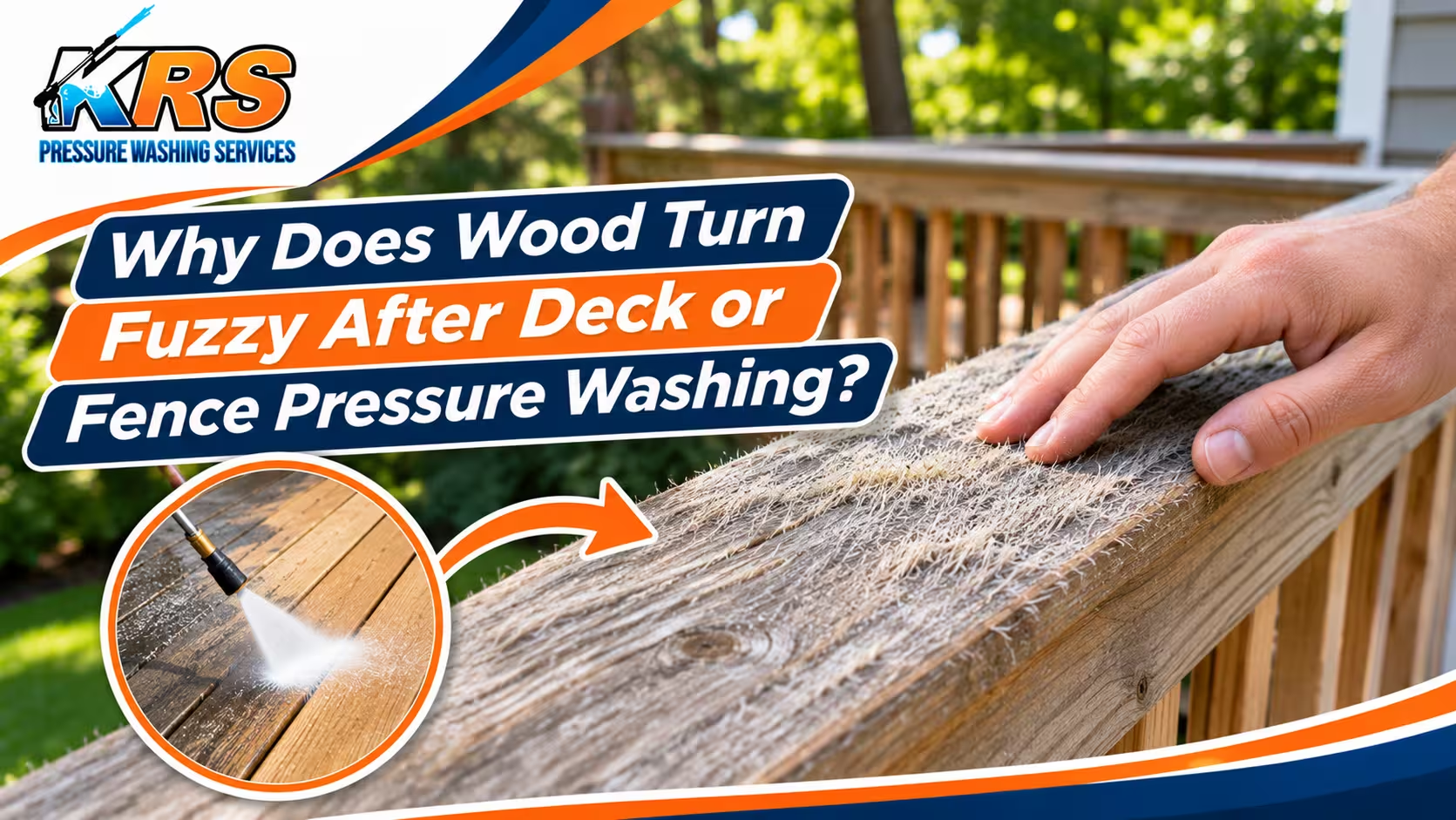
Your deck looked clean while the boards were wet, but the next morning they felt like coarse fabric. Tiny strands stand above the grain, especially near the ends of the boards and along the path of the spray. A wooden fence can look similarly hairy after washing, even when all visible dirt has disappeared.
Fuzzy wood after pressure washing usually means the cleaning process has lifted or torn surface fibers. Sometimes weathered wood was already vulnerable, and the wash simply exposed it; in other cases, excessive pressure removed softer wood between the grain lines. Light furring can often be smoothed after drying, but grooves, deep splinters, and weakened boards require more careful assessment.
What Are the Tiny Fibers Standing Up on the Wood?
The fuzzy material is generally raised wood grain, sometimes called furring. Wood is made of long cellulose-based fibers, and its surface does not wear evenly. When a water jet abrades the softer portions, little strands can remain attached while standing above the board. Unlike loose residue, these fibers are part of the wood; another strong rinse can worsen them.
Why Does a Pressure Washer Raise Wood Grain?
A pressure washer concentrates moving water into a relatively small spray pattern. If the nozzle is held too close, the fan is too narrow, or the operator pauses over one area, the impact can erode surface fibers instead of only removing grime. The softer earlywood between denser growth rings may wear away first, leaving ridges and a rough texture. Once material is removed, washing cannot put it back.
Moisture adds another complication. Wood fibers absorb water and swell, so a freshly washed board can look different as it dries. Some raised grain occurs through ordinary outdoor wetting and weathering, even without aggressive equipment. However, sudden fuzziness concentrated in wand tracks or on freshly cleaned sections is a useful sign that the washing method may have disturbed the surface. Check the pattern before blaming water alone.
Are Pine and Cedar More Likely to Become Fuzzy?
Many fences and decks use softwoods such as pressure-treated pine or cedar. Their relatively soft surface areas can be vulnerable to concentrated spray, particularly after years of sun exposure, repeated wetting, and drying. Dense hardwoods may resist abrasion differently, but they are not immune to gouging. Board age, grain, coatings, and deterioration also matter; no pressure setting suits every structure.
How Can You Tell Light Furring From Serious Damage?
A uniformly fine nap that becomes obvious only after drying may need limited surface preparation. Deep, sharp grooves following the nozzle, large lifted splinters, torn board edges, or visibly exposed fasteners are more concerning. Check whether the wood still feels solid and whether a defect affects a step, railing, or walking surface. A color difference alone does not prove physical damage.
| What You Notice | What It May Indicate | Sensible Next Step |
| Fine, even fuzz on sound boards | Raised surface fibers | Allow drying and assess light sanding |
| Long grooves following spray strokes | Water-jet erosion | Stop washing; evaluate repair depth |
| Splinters catching shoes or hands | Torn or weathered fibers | Keep the area out of use until corrected |
| Soft, crumbling, or loose boards | Possible deterioration beyond cleaning | Arrange a deck or fence repair assessment |
| Uneven color without rough texture | Weathering or coating differences | Check finish condition before sanding |
What Should You Do Immediately After Noticing Fuzzy Wood?
Stop pressure washing the affected boards. Do not aim a closer jet at the fuzzy sections to flatten them or use a stiff wire brush to knock down the strands. Let the wood dry fully, then inspect it from a low angle in daylight. Photograph a few representative boards and note whether damage is limited to one spray path, widespread across the deck, or concentrated on already weathered fence panels.
Until rough areas are assessed, avoid walking barefoot over a deck with prominent splinters and keep children away from damaged railing edges. Check for loose screws, unstable treads, and weakened boards separately from the fuzzy surface. If the structure was washed by a contractor, share the photographs promptly and ask how the cleaning method was selected. Review the wood after drying.
Can Sanding Fix Raised Wood Fibers After Washing?
Often, light furring on otherwise sound wood can be reduced through careful sanding with the grain after the boards are completely dry. Start with a small, inconspicuous test area to see whether the fibers lift off without exposing a noticeably different color or texture. Deck-finishing professionals commonly use light sanding during preparation, but the abrasive grade and tool should match the wood and the finish that will follow.
Sanding is not a substitute for repairs when pressure has carved channels, loosened splinters deeply, or revealed decayed wood. Aggressively sanding one groove may produce a hollow that remains visible across an entire board. Railings and steps deserve particular care because rough or weakened surfaces can affect safe use. If large areas need correction, consult a deck refinishing professional before removing more material than necessary.
Is It Better to Sand the Whole Deck or Only the Fuzzy Spots?
Spot sanding can work when fuzziness is mild and limited to a few boards. On a large visible deck, however, sanding only isolated squares can leave uneven color, absorption, or texture once the stain is applied. A refinishing contractor may recommend preparing complete boards or a broader section for a more consistent appearance. The choice depends on damage and the previous finish.
Should You Apply Wood Stain Right After Pressure Washing?
Not yet. Moisture remaining inside the boards can interfere with stain penetration and finish performance, even after the surface looks dry. Once the wood is clean and repairs are complete, follow the stain manufacturer’s dryness and moisture requirements. Weather, shade, wood species, and previous treatments can change drying time considerably, so a fixed number of hours is less dependable than verifying that the surface is ready.
Raised fibers should be addressed before finishing because a stain will not turn a rough surface into a smooth one. Remove sanding dust and check whether the chosen product is compatible with any remaining old coating. A finish can help limit future weathering, but it cannot rebuild wood that the spray has eroded. The U.S. Forest Service notes that finishes help reduce raised grain and cracking.
Could a Strong Cleaning Solution Make Wood Fuzzy Too?
Yes. Overly strong wood strippers, incompatible cleaners, or excessive chemical dwell time may weaken surface fibers and create a similar rough appearance. This is why an assessment should consider both the water jet and the products used. Never combine cleaning chemicals, especially bleach with acids or ammonia, and follow manufacturer instructions for dilution, surface testing, rinsing, and protective equipment. More aggressive chemistry is not automatically better for older wood.
How Can Deck and Fence Washing Prevent Fiber Damage?
Safer wood cleaning begins with inspecting the boards, identifying the coating and buildup, and choosing a product intended for that material. Cleaning solutions and appropriate brushing can loosen dirt or organic growth so the rinse does not need to rely on concentrated force. The KRS fence and deck cleaning service addresses different wood and outdoor surface conditions, making method selection especially relevant before washing begins.
If pressure equipment is appropriate, a wide fan, adequate nozzle distance, consistent movement, and rinsing along the grain help reduce localized abrasion. Test a discreet section first and stop if the surface starts to fur. The right approach also depends on pump flow, nozzle condition, wood species, and finish age. The broader ways pressure washing can damage a home are a reminder that material compatibility matters more than maximum pressure.
Does Fuzzy Fence Wood Need the Same Repair as a Deck?
Not always. A vertical fence board may be mainly a visual and finishing concern, while raised grain on deck treads, stair edges, or handrails can create a contact hazard. Fence pickets also vary in thickness and may be too weathered for heavy sanding. Review loose connections and rotting boards before cosmetic work. For both structures, the goal is to remove problematic fibers without unnecessarily thinning the sound wood underneath.
When Should You Call a Professional Instead of Sanding Yourself?
Seek help when furring covers much of the deck, the boards have deep wash marks, splinters are prominent, or a coating has failed unevenly. A cleaning contractor can assess a suitable future washing approach, while a deck repair or refinishing specialist may be needed for sanding, replacement, and staining. KRS Pressure Washing Services handles exterior cleaning in Burlington, KY; ask specifically about cleaning scope rather than assuming structural repairs or refinishing are included.
Frequently Asked Questions
Does Fuzzy Wood Mean a Deck Has Been Permanently Damaged?
Not always. Fine raised fibers on otherwise sound boards can often be removed with careful sanding after drying. Deep grooves, torn edges, or extensive erosion may require professional refinishing or board replacement. Inspect the texture before deciding.
Will Another Pressure Wash Smooth Raised Wood Grain?
No. Another strong wash can tear up additional wood fibers and deepen grooves. Stop washing, let the surface dry, and check whether light sanding is appropriate. Choose a gentler cleaning method for future maintenance.
How Long Should a Deck Dry Before Sanding?
Wait until the boards are fully dry, not merely dry to the touch. Humidity, shade, weather, and wood thickness affect timing. Follow tool and finish instructions, and use a moisture check when preparing for staining.
Can Wood Stain Hide a Fuzzy Deck Surface?
No. Stain may change the color, but raised fibers remain rough and can make the finish look uneven. Smooth suitable boards, remove sanding dust, and confirm the wood is dry before applying a compatible coating.
Is Soft Washing Safer Than High-Pressure Washing for Wood?
Often, because cleaning solutions and gentle rinsing can reduce mechanical abrasion. However, incompatible chemicals or excessive scrubbing can still damage wood. The method should reflect the wood species, board condition, existing finish, and cleaning product instructions.
Restore the Surface Before the Next Cleaning
Fuzzy deck or fence boards are a warning to stop and examine the wood rather than keep spraying. Lightly lifted fibers may be repairable after drying, but deeper damage needs a different approach. If you are planning wood cleaning in Burlington, KY, contact KRS Pressure Washing or call (859) 300-1586. Explain the board condition and any previous cleaning problems so the team can discuss suitable next steps.