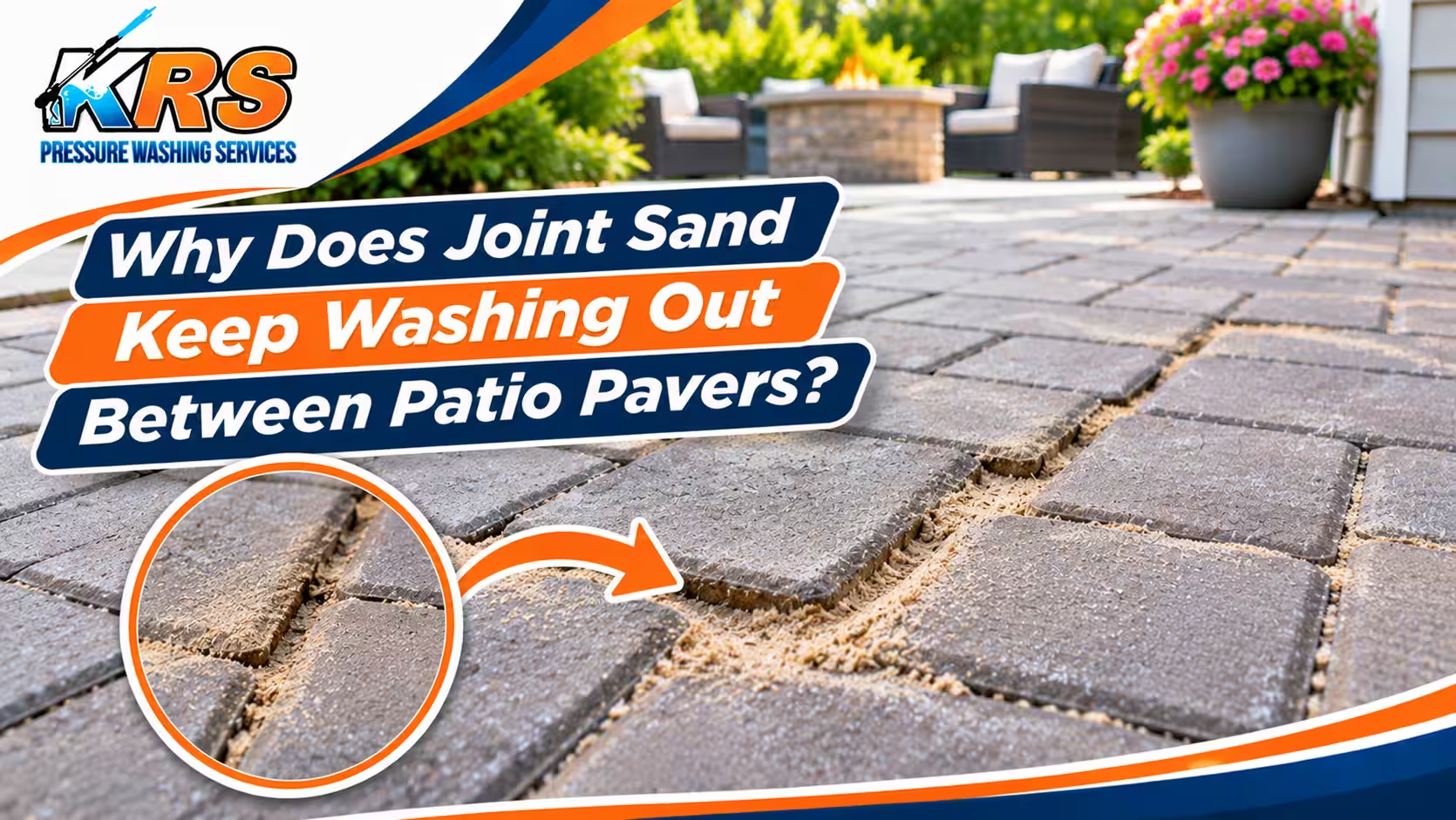
The patio looked solid when it was installed, but now small channels run between the pavers. After heavy rain, sand collects near the steps or at the bottom of the slope. A few joints are almost empty, and brushing in replacement sand seems to help only until the next storm. That pattern usually points to more than ordinary surface dirt.
Paver joint sand washing out happens when moving water, aggressive cleaning, improper installation, or problems within the paving structure carry joint material away. Replacing the missing sand can help, but only after you understand where it is going. Otherwise, each refill may disappear for the same reason, while gaps and shifting pavers become harder to ignore.
Why Is Sand Important Between Patio Pavers?
Joint sand fills the spaces between interlocking pavers and helps the individual units work together as a stable surface. It limits movement and keeps the joints from becoming open channels for debris. On a typical sand-set patio, the pavers also rest on a separate bedding layer above a prepared base. Joint sand and bedding sand serve different purposes, even though both may be hidden from view.
A slight change in the joint surface is not always a major failure. However, deep empty gaps, spreading joints, or pavers that rock underfoot deserve attention. The Concrete Masonry and Hardscapes Association recommends replenishing conventional joint sand when the loss exceeds roughly half an inch. Repeated loss matters because the joint material contributes to the interlock that helps maintain a consistent, even patio.
What Keeps Washing the Joint Sand Away?
Concentrated Rainwater and Poor Drainage
Water following the same route after every storm can move loose sand out of the joints. Check beneath roof drip lines, near downspouts, at low patio corners, and along slopes where runoff speeds up. If a gutter discharges directly onto the paving, the sand may disappear in a narrow trail rather than across the entire surface. Replacing sand without changing that water path is unlikely to solve the problem.
Pressure Washing Too Close to the Joints
A pressure washer can remove joint sand when the spray is aimed into gaps or held too close to the pavers. The loss can be especially noticeable after someone follows joint lines with a narrow nozzle to remove weeds or dirt. Proper pressure washing around paved surfaces should account for the joint material, not just the strength of the pavers themselves. High pressure is not a shortcut for careful cleaning.
Inadequate Filling or Early Sand Movement
New joints can settle as sand works into available spaces, particularly when the installation was not filled and compacted correctly. Wind, foot traffic, and runoff may then expose a lower joint level. If the patio loses a surprising amount of material shortly after installation, ask what sand was used, how the joints were compacted, and whether the area was protected from concentrated water during the initial settling period.
Why Does Polymeric Sand Sometimes Wash Out Too?
Polymeric sand contains binders intended to resist erosion after the product is installed and activated correctly. It is not the same as loose masonry joint sand, and it is not automatically waterproof. A product may fail when joints were too shallow, the pavers were wet during placement, too much water displaced the sand, or heavy rain arrived before curing. Each brand specifies suitable joint widths, depths, and weather conditions.
The installation sequence matters. Sand generally must reach the required depth, be consolidated as directed, and receive the manufacturer’s specified water activation without being flooded. A hardened crust across the top does not prove the entire joint is correctly filled. If polymeric sand breaks apart or disappears repeatedly, identify the product and review installation conditions rather than simply adding a thin new layer over the remaining material.
Is the Missing Sand Only at the Surface or Beneath the Pavers?
Loose joint material may wash across the patio while the pavers themselves remain level and stable. A deeper problem becomes more likely when the surface sinks, individual blocks rock, joints widen, or sand seems to emerge from an edge or drain. Water can saturate the bedding layer beneath a patio and move fine material toward an escape route. This needs a different repair from routine joint replenishment.
Look at the outer edge of the patio as well. Edge restraints keep interlocking pavers from spreading sideways and help contain the bedding and joint materials. If a border has shifted or separated, gaps may widen and sand may escape at the perimeter. Repeated settlement, standing water, or displaced edging should be assessed before anyone promises that another bag of sand will make the paving stable.
What Should You Check Before Replacing the Sand?
Walk the patio when conditions are safe and dry. Note the deepest gaps, inspect the slope, and look for sand deposits where runoff stops. Photograph the same sections after a storm to see whether loss follows a particular water path. Also check for loose pavers, weeds in open joints, pooling water, and any washing or joint-sand work completed recently. These clues help distinguish a maintenance issue from drainage or base trouble.
Ask whether the patio uses ordinary sand, polymeric sand, or a specially designed permeable joint material. Permeable paver systems may rely on specified open-graded aggregate and should not be filled with conventional polymeric sand without design approval. If you do not know how the patio was constructed, avoid choosing replacement material solely by appearance. The proper repair must match the actual paving system and manufacturer’s requirements.
How Should Washed-Out Paver Joints Be Refilled?
For an otherwise sound patio with conventional joint sand, the damaged joints may be cleaned of debris and replenished with the recommended dry jointing material. The sand needs to reach the appropriate level, with consolidation or compaction performed as the paving specification requires. Simply sweeping a little sand over the top may leave voids underneath. Check the joint depth and the condition of adjacent pavers before treating the task as complete.
Switching to polymeric sand is not usually a matter of sprinkling it over old, partially filled joints. Many polymeric products require the existing joint material to be removed to a specified depth before replacement. Follow the product’s limits for width, depth, surface dryness, activation, and cure time. Different products have different instructions; too little or too much activation water can compromise the result or leave residue on the pavers.
When the work involves cleaning, re-sanding, and possibly sealing, the sequence is important. A paver restoration assessment can address those related tasks, but it should still begin by identifying the reason for sand loss. If the patio is uneven or the base drains poorly, re-sanding alone will not correct the underlying problem. Ask for a clear scope before approving joint replacement or any sealer application.
When Is Re-Sanding Not Enough to Repair a Patio?
When pavers have noticeably settled, shifted, or developed widened joints, a contractor may need to lift affected units, correct the bedding or base, restore edge restraint, and reset the surface before refilling joints. Water that continually pools against the patio can require drainage changes as well. Covering these symptoms with new sand may briefly improve the appearance while leaving the same movement or erosion mechanism in place.
Joint stabilizers and some sealers can reduce sand loss in suitable installations, particularly where ordinary runoff is a recurring concern. They are not universal repairs for a flooded base or a failing perimeter. Applying sealer over damp joints or incompatible residue can also cause appearance problems. Choose stabilization only after the paving condition, product compatibility, and moisture issues have been evaluated, rather than assuming every patio needs a coating.
How Can You Prevent Joint Sand From Disappearing Again?
Keep downspouts from discharging directly onto paver joints, clear drainage outlets, and watch for new channels after storms. Avoid spraying a narrow pressure-washer jet into the gaps, and tell cleaning contractors which joint material is installed. Inspect the patio after major rain, especially along slopes and borders. Early replenishment of appropriate conventional sand is less disruptive than waiting until multiple pavers have begun to move.
KRS Pressure Washing Services provides cleaning, re-sanding, and sealing as part of its published paver restoration offering in Burlington, KY. For a patio that keeps losing sand, ask what the proposed work includes and whether drainage or base repairs need separate attention. The company can discuss its cleaning and restoration scope, but visible settlement or a failed base may require a paving installation or drainage specialist.
Frequently Asked Questions
Does Rain Normally Wash Sand Out of Paver Joints?
A small amount of conventional joint sand may settle or be lost over time. Repeated deep gaps after rain suggest concentrated runoff, incomplete filling, or another problem. Check the water path before adding more sand.
Can Pressure Washing Remove Polymeric Sand?
Yes. Strong spray directed into the joints can damage or dislodge polymeric sand, especially if it was installed incorrectly or has deteriorated. Ask for a cleaning method that protects the joint material rather than targeting gaps with a narrow nozzle.
Can I Put New Polymeric Sand Over Existing Sand?
Usually not as a thin surface topping. Many products require removing existing material to a minimum depth so the new sand can bond and cure properly. Follow the exact manufacturer’s instructions for the chosen product.
Will Sealing Pavers Stop Sand From Washing Away?
Some compatible stabilizers or sealers can reduce joint sand erosion, but they cannot fix improper drainage, loose edging, or a failing base. Identify the reason sand is escaping before deciding whether sealing belongs in the repair plan.
When Do Missing Paver Joints Need Professional Repair?
Seek an assessment when joints repeatedly empty, pavers wobble, edges spread, or the patio develops depressions. These may indicate bedding, drainage, or restraint problems. Re-sanding alone may not restore a stable surface.
Fix the Water Problem Before Replacing the Sand Again
Sand washing out between patio pavers is a clue, not a complete diagnosis. The lasting solution depends on whether runoff, cleaning pressure, installation mistakes, or the supporting layers are responsible. KRS Pressure Washing Services can discuss paver cleaning and re-sanding options in Burlington, KY. To describe your patio and request a quote, contact KRS Pressure Washing or call (859) 300-1586.