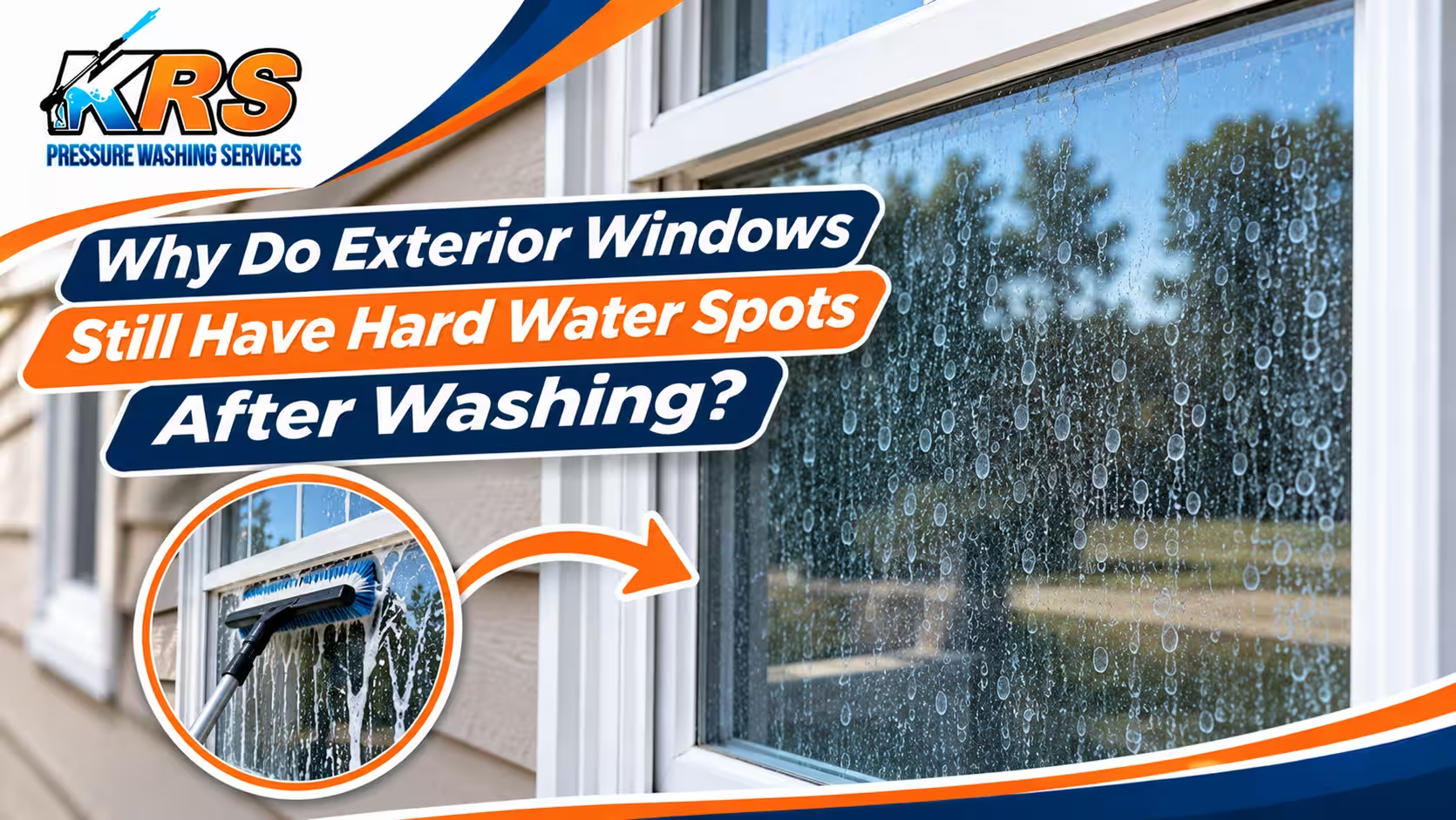
You finish washing the windows, wipe away the last streaks, and everything looks clear. But once the sunlight hits the glass, dozens of white circles appear again. Some are concentrated near the bottom of the window, while others follow the pattern of a lawn sprinkler. No matter how many times you rinse or wipe the glass, those stubborn marks remain.
Hard water spots on windows develop when water evaporates and leaves dissolved minerals behind. Calcium, magnesium, and other minerals can form deposits that ordinary window cleaners struggle to remove. Some spots are removable surface residue, while older deposits may become strongly attached or contribute to glass damage. Understanding which problem you have is important before trying stronger cleaning products.
What Causes Hard Water Spots on Exterior Window Glass?
Most water supplies contain dissolved minerals. Calcium and magnesium are the main contributors to water hardness, although iron, silica, and other substances can also affect deposits. When mineral-containing water lands on a window, the liquid gradually evaporates. The dissolved material remains, often forming small rings that resemble the original droplets. Repeated exposure can turn these separate marks into a cloudy film.
Water temperature, sunlight, and the amount of dissolved material influence how quickly visible deposits accumulate. A window receiving direct afternoon sun may dry quickly, leaving mineral residue where droplets repeatedly land. Over time, fresh deposits can build on older ones. The surface may feel slightly rough even after ordinary washing because the remaining material is mineral scale rather than loose dirt.
Why Do Windows Still Look Spotted After Regular Washing?
Ordinary glass cleaners are mainly intended to remove everyday dirt, fingerprints, and surface grime. A conventional wash may remove pollen and dust while leaving mineral deposits that have become strongly attached to the glass. When the window is wet, these remaining deposits can be difficult to notice. After drying, the white circles reappear, making it seem as though the washing accomplished very little.
Another possibility is that the cleaning water itself is leaving fresh residue. If mineral-rich tap water is used for the final rinse and allowed to dry on the glass, new spots can form. This is different from failing to remove old scale. Comparing a properly dried test section with the surrounding glass helps determine whether the problem is existing buildup or new spotting introduced during cleaning.
Where Do Exterior Window Mineral Deposits Come From?
Sprinkler Water Reaching the Windows
Lawn sprinklers are a common source of repeated mineral staining on ground-floor windows. A spray head positioned too close to the house may wet the same pane every morning. As the water dries, dissolved minerals collect in small rings, eventually producing a hazy appearance. The marks often follow a recognizable spray arc, with the heaviest buildup on the side facing the sprinkler.
Water Running Down Exterior Walls
Rainwater can carry dissolved material and accumulated residue from nearby building surfaces. Runoff from masonry, concrete, or other exterior materials may leave persistent marks where water crosses the glass. Look for vertical streaks beginning near the upper window frame or beneath a ledge. These deposits may differ chemically from ordinary hard-water spots and sometimes require a different assessment.
Mineral-Rich Water Used During Cleaning
A garden hose can rinse away soap and loose dirt while introducing new dissolved minerals. If the water dries without being removed, faint white spots may appear again. Water-fed window cleaning systems sometimes use purified water to reduce this problem. However, purified rinse water does not automatically remove old mineral scale that has already bonded to the glass.
How Can You Identify the Type of Marks on Your Windows?
The pattern provides useful clues before you reach for another cleaner. Small circular deposits often follow evaporated droplets, while long vertical marks suggest runoff. A dull film across an entire pane may indicate widespread mineral contamination, but it could also involve damaged glass or an exterior coating. Observe the window when completely dry, preferably from different angles in natural daylight.
| What You Notice | Possible Cause | What to Check |
| Small white circles near the lawn | Sprinkler mineral deposits | Direction and reach of irrigation spray |
| White spots appearing after rinsing | Minerals in cleaning water | Final rinse and drying method |
| Vertical cloudy streaks | Runoff from frames or masonry | Water paths above the window |
| Rough or chalky deposits | Accumulated surface mineral scale | Results of a gentle cleaning test |
| Persistent haze on clean, smooth glass | Possible etching or coating damage | Glass condition and manufacturer guidance |
| Fog or moisture between two panes | Possible insulated-glass seal problem | Whether marks are actually on an accessible surface |
How Do You Tell Mineral Deposits From Glass Etching?
Mineral deposits sit on the glass surface, although some become difficult to remove through ordinary washing. Etching involves changes to the glass itself. A window may look spotted in both situations, but the treatment is different. Removing a deposit can improve clarity; removing more surface material is not an appropriate cleaning response when the underlying glass has already been altered.
Start with a small area that can be reached safely. Wash away loose dirt with a manufacturer-approved product, rinse, and dry the pane. If a suitable mineral-removal treatment improves the marks, the problem likely includes removable deposits. If cloudiness remains despite successful deposit removal, consider possible etching, coating damage, or another glass defect. A professional assessment is preferable to repeated aggressive scrubbing.
Can Hard Water Stains Be Removed From Windows Completely?
Fresh, light deposits are generally easier to remove than thick mineral buildup that has accumulated through repeated wetting and drying. Some stains respond to gentle cleaning and a compatible mineral remover, while others may need specialized glass treatment. The result depends on the mineral composition, how long the deposit has remained, and whether the glass has any protective or decorative coating.
A complete restoration cannot be guaranteed. Certain silicate deposits can become especially difficult to remove, and a glass surface that has already been etched may retain visible marks after the mineral residue is gone. Specialty glass creates additional limitations because some factory-applied exterior coatings can be damaged by aggressive cleaners or polishing. Identifying the window product is an important part of deciding what can be safely corrected.
What Is the Safest Way to Clean Hard Water Spots?
Begin With Gentle Glass Cleaning
Remove loose grit and debris before rubbing the glass, since trapped particles can scratch the surface. Use a soft cloth and a mild cleaning solution approved by the window manufacturer. A clean squeegee or lint-free cloth helps remove the rinse water before it evaporates. Avoid cleaning in direct sunlight when possible, because fast drying makes streaks and fresh spotting harder to control.
Test a Compatible Mineral Remover
If visible deposits remain, identify the glass type and check whether the manufacturer permits an appropriate mineral-removal product. Some guidance allows mild acidic cleaners on particular glass surfaces, but the same treatment may be unsuitable for coated or specially treated windows. Test a small inconspicuous area, follow the product instructions, and protect surrounding frames, sealants, paint, and landscaping.
Check the Glass After It Dries
A window can look clear while wet and still show stains afterward. Allow the treated test section to dry completely before deciding whether the cleaner worked. Inspect for remaining circles, uneven haze, scratches, or coating changes. If the marks remain unchanged, stop increasing chemical strength or scrubbing pressure. A different diagnosis may be needed rather than another round of the same treatment.
Which Window Cleaning Mistakes Can Make Hard Water Marks Worse?
Abrasive pads, metal scrapers, inappropriate acidic cleaners, and excessive rubbing can damage glass or exterior coatings. Strong pressure washing is another poor substitute for proper glass cleaning, especially around window seals and frames. Even products advertised for removing mineral scale may be unsuitable for a particular window system. Manufacturer instructions should take priority over general household cleaning recommendations.
One common mistake is treating every white mark as calcium buildup. Some persistent stains contain silica or material from masonry runoff, while apparent cloudiness can originate from damage or moisture between glass panes. Applying several unrelated products without identifying the cause can create new problems. Never mix cleaning chemicals, and do not use unapproved restoration compounds on coated glass.
When Should You Choose Professional Window Cleaning?
Professional help becomes useful when mineral marks cover several panes, ordinary cleaning has failed, or windows are difficult to reach safely. A cleaner can evaluate the visible buildup, the glass type, and the suitability of different cleaning methods. When arranging professional window cleaning, explain that stubborn mineral spots remain after washing so the company can distinguish routine cleaning from any additional treatment.
KRS Pressure Washing Services provides exterior window cleaning in Burlington, KY, and its service page specifically addresses streaks, water spots, and accumulated grime. However, routine window cleaning and specialized glass restoration are not necessarily the same service. Before booking, ask whether the proposed work includes hard-water deposit treatment, whether a small test can be performed, and what limitations apply if the glass is already etched.
Could House Washing Leave Spots on Nearby Windows?
Exterior cleaning can temporarily wet windows as siding, gutters, and surrounding surfaces are rinsed. If mineral-rich water or cleaning residue is allowed to dry on glass, spotting or streaking may become visible afterward. This does not mean every house wash causes mineral staining, but it helps explain why windows sometimes need separate attention after the surrounding exterior has been cleaned.
When scheduling house washing, ask how nearby windows and frames will be protected and whether glass rinsing is part of the agreed scope. Siding and window glass may require different cleaning solutions and tools. A low-pressure wash designed for siding should not automatically be treated as a dedicated mineral-removal process for the windows beside it.
How Can You Stop Hard Water Spots From Returning?
The most effective preventive step is reducing repeated contact with mineral-rich water. Check the irrigation system while it is running and adjust sprinkler heads that spray toward windows. A different spray pattern or drip irrigation near the house can reduce exposure. Also inspect gutters, window ledges, and exterior drainage paths that direct mineral-containing runoff onto the glass.
After routine cleaning, remove rinse water using a suitable squeegee or lint-free cloth, or use an appropriate purified-water cleaning process. Keep the glass free of accumulating deposits rather than waiting until thick white scale develops. Regular maintenance can make mineral buildup easier to manage, but persistent spotting will continue if the same sprinkler or runoff source repeatedly wets the window.
What Should You Ask Before Hiring a Window Cleaner?
Explain whether the spots appeared after sprinkler use, house washing, or several months of normal weather exposure. Mention any previous cleaners, abrasives, or stain-removal products used on the glass. A useful discussion should cover the window manufacturer, possible exterior coatings, the cleaning method, expected results, and whether specialized restoration would fall outside the ordinary service scope.
KRS Pressure Washing Services offers residential and commercial exterior cleaning, including windows, in Burlington, KY. For a property with persistent white spots, photographs taken after the glass has dried can help describe the problem. Ask the team to explain what its window cleaning service includes rather than assuming that all bonded deposits or permanent glass damage can be corrected.
Frequently Asked Questions
Why Do White Spots Come Back After Window Cleaning?
White spots often remain because ordinary cleaning removes dirt but not strongly attached mineral deposits. New spots can also form when mineral-rich rinse water dries on the glass. Check the cleaning method and nearby sprinkler exposure.
Can Vinegar Remove Hard Water Spots From Exterior Glass?
Vinegar may help with light mineral deposits on some compatible glass surfaces. However, acidic cleaners are not appropriate for every coating or window system. Check the manufacturer’s instructions and test a small section before use.
Do Sprinklers Cause Permanent Window Stains?
Sprinklers can leave mineral deposits that become increasingly difficult to remove. Prolonged accumulation may contribute to glass staining or damage under certain conditions. Redirecting the spray reduces repeated exposure and helps prevent additional buildup.
How Can I Tell If My Window Glass Is Etched?
Possible etching appears as persistent cloudiness or marks that remain after suitable cleaning removes surface deposits. However, coating damage and other defects can look similar. A glass professional should assess the pane before abrasive restoration.
Can Professional Window Cleaning Remove Every Hard Water Stain?
Not always. Many surface deposits can improve with compatible treatment, but deep staining, silicate buildup, and etched glass may require specialized restoration. Results depend on the glass condition, coating, mineral composition, and treatment compatibility.
Keep Exterior Windows Clear by Addressing the Water Source
Hard water spots are easier to manage when the cause is identified before the glass receives repeated treatments. Mineral deposits, damaged coatings, and etched surfaces require different approaches, so aggressive scrubbing is rarely a useful first step. For window cleaning questions in Burlington, KY, contact KRS Pressure Washing or call (859) 300-1586. Describe the spots, their location, and previous cleaning attempts when requesting a quote.