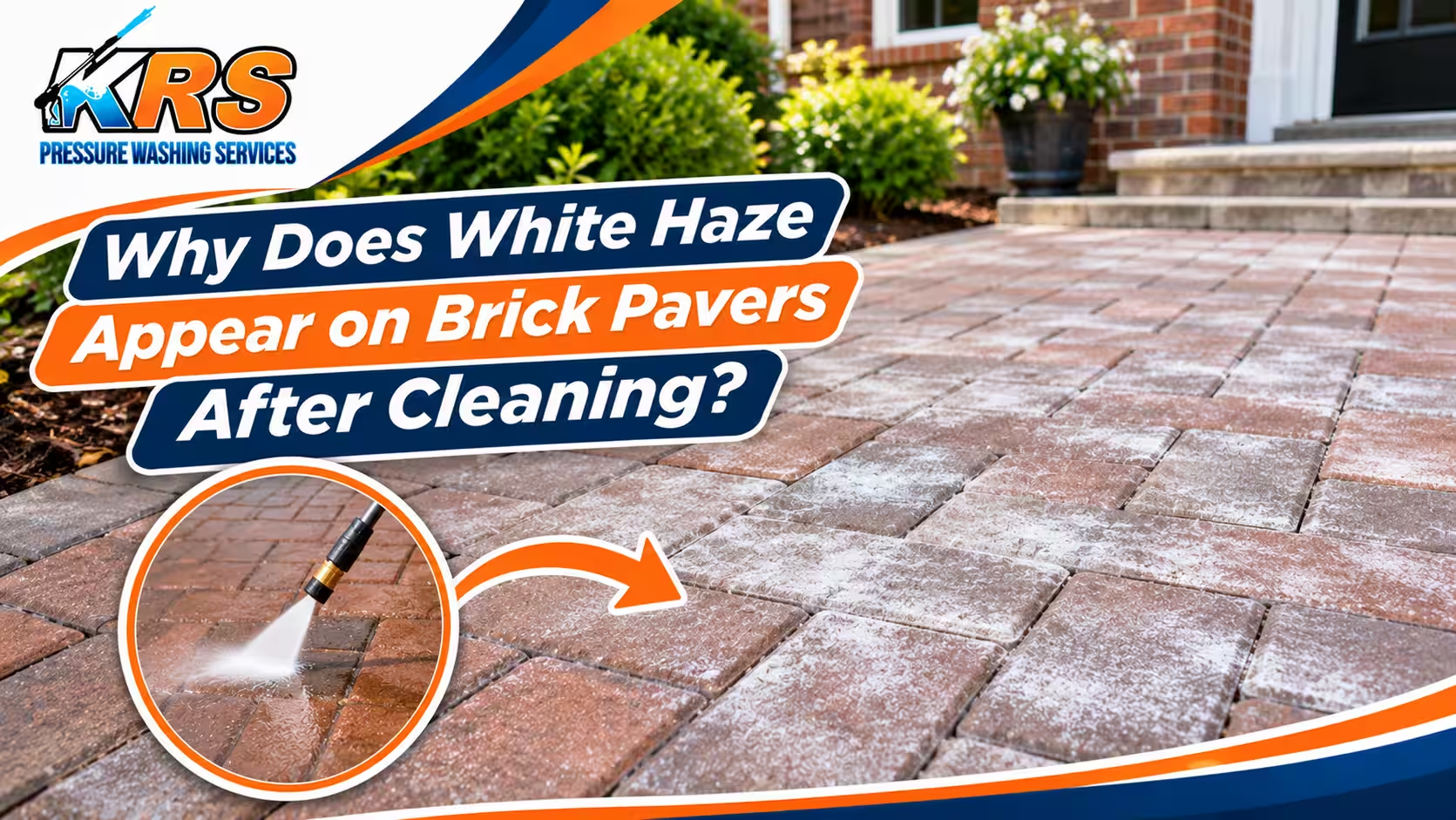
Your patio looks rich and clean while the pavers are wet. The next afternoon, a pale film spreads across the surface, making red and charcoal blocks appear dusty. Some patches brush off like powder, while others look milky beneath a glossy coating. Both can follow cleaning, but they do not necessarily have the same cause or solution.
White haze on brick pavers may come from mineral salts, leftover polymeric sand binder, cleaning residue, or moisture trapped beneath sealer. Washing sometimes reveals an existing problem rather than creating it. The important first step is to identify the material and the type of film before using more water, applying a stronger chemical, or sealing over the discoloration.
What Is the White Film Appearing on Your Patio Pavers?
A white deposit may sit loosely on a paver or appear within a coating. Concrete pavers and fired-clay brick pavers have different compositions, and not every cleaner suits both. A powder that returns after rain suggests something different from a shiny film that has turned cloudy. Look at the surface when completely dry, including the joints and any sealed sections.
Why Does Efflorescence Form on Brick and Concrete Pavers?
Efflorescence develops when moisture dissolves soluble salts within masonry, bedding material, or the base, carries them toward the surface, and evaporates. The minerals remain as a pale powder or crust. With cement-based pavers, calcium compounds can react as they reach the air and leave whitish deposits. Fired-clay brick pavers can also show efflorescence, although the salt sources and chemistry may differ.
Cleaning can introduce enough water to make previously hidden deposits noticeable, particularly when pavers and joints remain damp. Sometimes the surface looks dark and clear while wet, then turns white as it dries. New paving can show temporary efflorescence, but persistent moisture from irrigation, drainage problems, or the bedding layer can keep deposits returning. The appearance alone does not prove the pavers are defective.
Could Polymeric Sand or Sealer Be Causing the Haze?
Polymeric Sand Residue Near the Joints
Polymeric joint sand contains binders designed to help hold the sand in place once activated as directed. Dust left on the paver face during installation can create haze when it gets wet. It often follows the edges of joints, covers textured surfaces unevenly, or appears shortly after re-sanding. The sand manufacturer may specify a compatible residue remover, but fresh installations require extra care and product-specific waiting periods.
Sealer Blushing Beneath a Cloudy Finish
Sealed pavers can turn milky when moisture is trapped beneath a coating, too much sealer is applied, or incompatible layers interfere with curing. This is often called sealer blushing. The whiteness may appear beneath a smooth or glossy film rather than brushing away as powder. Sunlight, surface temperature, humidity, and the sealer’s formulation affect how the problem develops and whether a specialist can correct it.
Cleaner Residue and Irrigation Minerals
A cleaner that was not rinsed according to its label may leave streaks or a light film, particularly where liquid collected in low spots. Hard or mineral-rich sprinkler water can also dry into pale spots near the same spray pattern. These deposits may resemble efflorescence but have different sources. Ask which products were applied before assuming that every white patch needs an acidic masonry treatment.
How Can You Tell Which Type of White Haze You Have?
Start with the timing and texture rather than guessing from color alone. A dry, powdery deposit that fades when wet may indicate efflorescence. A milky area beneath a continuous glossy film suggests a sealer issue. Fine residue concentrated near newly filled joints points toward polymeric sand. None of these signs confirms a diagnosis on its own, particularly when several products were applied during the same project.
| Appearance or History | Possible Cause | What to Check |
| Powder returns after drying or rainfall | Efflorescence | Recurring moisture and drainage |
| White film after fresh joint sanding | Polymeric sand residue | Sand brand and installation instructions |
| Milky haze beneath a shiny finish | Sealer blushing or coating failure | Sealer type, age, and application records |
| Pale runoff streaks after cleaning | Cleaner or water residue | Products used and rinse pattern |
Why Does the Haze Become Visible After Pressure Washing?
Water can temporarily conceal a white mineral deposit while also moving more dissolved material through porous paving. As the patio dries, salts may crystallize where moisture evaporates. Washing can also strip away ordinary dirt that previously hid a chalky appearance. If the pavers were recently sealed or re-sanded, the timing may instead point to coating moisture or leftover binder. Cleaning history matters as much as appearance.
A high-pressure nozzle is not a reliable way to determine the cause. Concentrated water can disturb joint sand, loosen vulnerable surface material, or introduce more moisture into the assembly. If the discoloration appears after a contractor’s visit, photograph the fully dry patio and request the names of cleaners, joint sand, and sealers used. Do not immediately repeat the original treatment at higher pressure.
Can Efflorescence Be Removed Without Damaging Pavers?
For a light, loose deposit, careful dry brushing with a suitable nonmetallic brush may reduce the powder without saturating the surface again. Some early efflorescence diminishes naturally through weather exposure. Persistent deposits may need a masonry cleaner designed for that exact paver material. Manufacturers caution that inappropriate acidic products can discolor finishes or damage the face, so a hidden test patch is important.
Before treatment, check whether moisture is entering from poorly directed sprinklers, low spots, or drainage beneath the paving. Cleaning does not permanently stop salts from migrating if the source remains active. Never assume household vinegar or muriatic acid is safe for every brick, concrete paver, joint, or sealer. Follow manufacturer instructions, control runoff, and keep any cleaner away from incompatible materials and landscaping.
What If the White Film Came From Polymeric Sand?
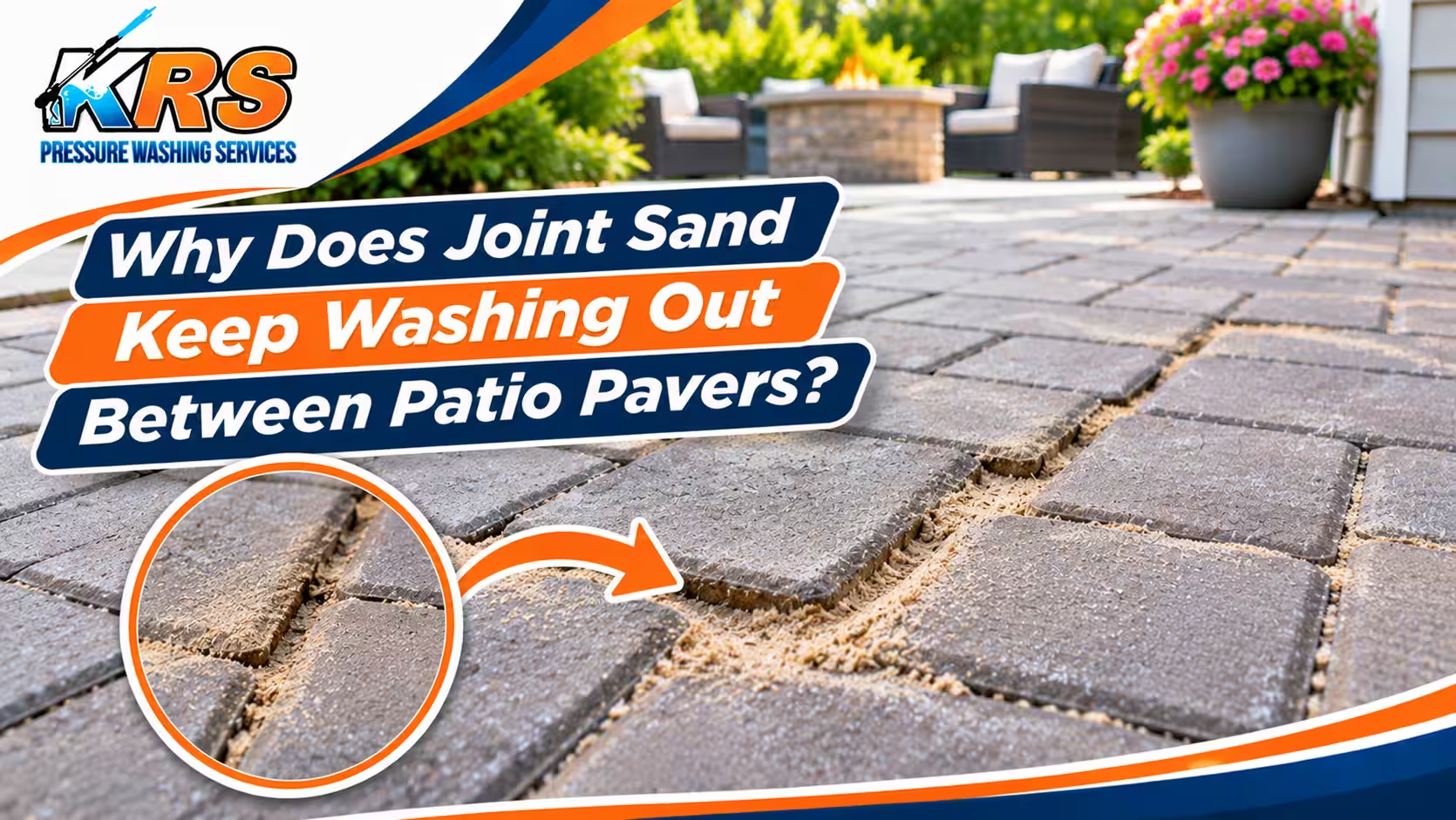
Ask the installer for the sand manufacturer and product name. Different formulations have different activation instructions, cure times, and approved cleaners. A compatible haze treatment may work, but applying it before the joint material has cured can weaken the installation. Scrubbing or pressure washing aggressively at the joints can also remove sand that is needed for proper paver performance.
If the film is concentrated in low spots or textured paver faces, the sand may have been activated while fine residue remained on the surface. Correcting that problem may require specialist cleaning and careful protection of the joints. Do not spread fresh joint sand across a hazy patio until the cause has been identified, since that can add another layer of residue instead of solving it.
Can Cloudy Paver Sealer Be Cleaned Off?
Sometimes, but a coating problem cannot be treated like loose mineral dust. A contractor needs to identify whether the finish is water-based or solvent-based, whether layers are compatible, and whether trapped moisture or excess application caused the whitening. Depending on the product, correction may involve a manufacturer-approved treatment, removing a failed coating, or allowing suitable drying conditions. There is no universal solvent or quick rinse.
Do not apply another clear coat just to make the pavers look darker. Sealing over efflorescence can trap the white deposit beneath the finish, and adding sealer over an already cloudy coating can worsen the appearance. Before any reapplication, confirm that the surface is clean, sufficiently dry, and compatible with the selected product. The manufacturer’s directions govern preparation and curing conditions.
When Does the Patio Need Paver Restoration Instead of Another Wash?
A patio with failing sealer, missing joint sand, uneven coating, and recurring haze may need a coordinated plan rather than repeated spot cleaning. That is where paver restoration becomes relevant: cleaning, re-sanding, and sealing are connected steps, and doing them in the wrong order can leave a disappointing finish. The existing condition should determine which steps are necessary, not a standard package applied automatically.
KRS Pressure Washing Services lists paver cleaning, re-sanding, and sealing among its restoration services. That does not establish that every mineral deposit, failed coating, or polymeric-sand haze can be removed. Ask whether the proposed work includes diagnosis of the existing film, a small test area, protection of joint materials, and product-specific preparation before agreeing to a full restoration.
How Can You Prevent White Haze After Future Cleaning?
Start with drainage. Redirect sprinklers that repeatedly soak the patio, keep runoff from pooling at low points, and investigate joints that stay wet long after nearby paving dries. Use cleaning products approved for the specific brick or concrete pavers, and rinse them according to the label. When re-sanding, follow the joint material manufacturer’s requirements for a clean, suitably dry paver face before activation.
Before sealing, allow the paving and joints to meet the sealer manufacturer’s moisture and curing requirements. Check for efflorescence, leftover sand dust, and incompatible older coatings first. A professional should also consider temperature, humidity, forecast rain, and runoff control during the work. These precautions cannot eliminate every future mineral deposit, but they can reduce avoidable haze caused by poorly timed cleaning or sealing.
Frequently Asked Questions
Does White Haze Mean My Brick Pavers Are Damaged?
Not necessarily. Efflorescence is commonly a cosmetic salt deposit, not evidence of structural failure. However, flaking pavers, loose joints, or a deteriorating sealer require separate assessment. Identify the white material before choosing a repair.
Will Pressure Washing Remove Efflorescence From Pavers?
Pressure washing may remove loose deposits, but water can also bring additional salts to the surface. Excessive pressure risks damaging paver faces and joint sand. For stubborn efflorescence, check the paver manufacturer’s approved cleaning methods.
Why Did My Pavers Turn White After Sealing?
A milky finish can result from trapped moisture, excess sealer, incompatible layers, or unfavorable curing conditions. Confirm the sealer type before attempting a fix. Applying another coat without identifying the problem may make the haze worse.
Can Polymeric Sand Leave White Residue on Pavers?
Yes. Fine sand binder left on the paver surface may form a visible film after activation. The correct cleaner and waiting period depend on the sand product. Ask the installer for its instructions before treating the residue.
Should You Seal Pavers That Still Have White Haze?
Usually not until the haze is identified and addressed. Sealer can trap efflorescence or residue and make later correction harder. Confirm that the pavers and joints are clean, dry, and ready according to the chosen product’s instructions.
Clear the Cause Before Restoring the Color
A white patio does not automatically need stronger washing or new sealer. Loose salts, sand residue, and cloudy coatings require different responses, and the wrong treatment can make the problem more expensive. For paver cleaning and restoration questions in Burlington, KY, contact KRS Pressure Washing or call (859) 300-1586. Share photos and any recent cleaning, sanding, or sealing records so the team can discuss an appropriate assessment.