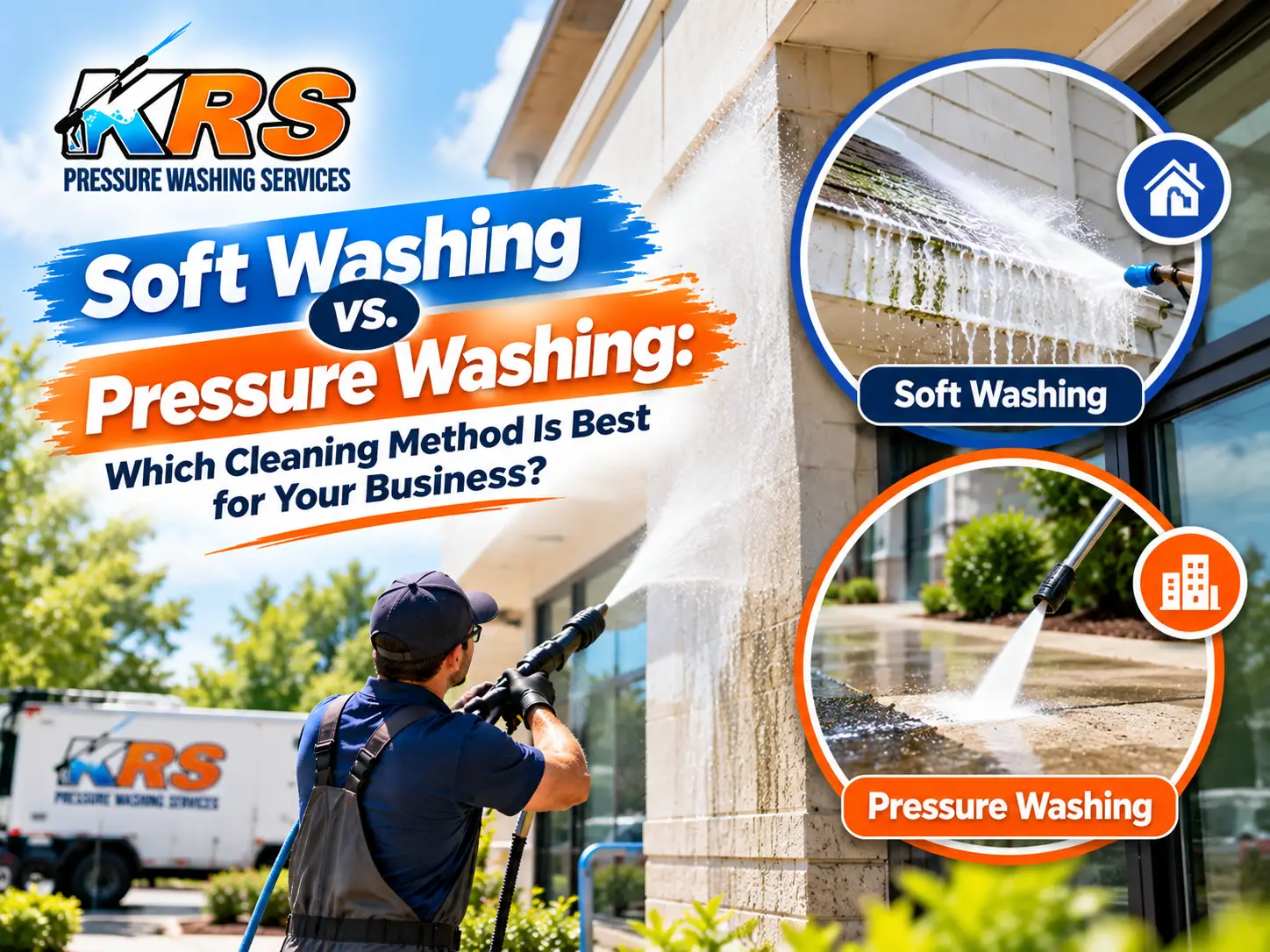
Neither method wins across the board. When comparing soft washing vs pressure washing for business, the right answer usually depends on the surface: soft washing for the building envelope, pressure washing for the hard flatwork around it. Pick the wrong one and you either damage the exterior or pay for a cleaning that doesn’t Soft Washing vs. Pressure Washing: Which Cleaning Method Is Best for Your Business?
Neither method wins across the board. When comparing soft washing vs pressure washing for business, the right answer usually depends on the surface: soft washing for the building envelope, pressure washing for the hard flatwork around it. Pick the wrong one and you either damage the exterior or pay for a cleaning that doesn’t last.
This guide explains how the two methods differ, matches each to common commercial surfaces, covers cost factors, and raises the runoff and liability questions that property managers often overlook.
How the Two Methods Differ
Pressure washing relies on force. Equipment typically runs from about 1,300 to 4,000 PSI, using water alone or with detergent to blast away oil, gum, dirt, and caked-on grime. It’s fast and effective on durable surfaces.
Soft washing relies on chemistry. It uses low pressure, generally under 500 PSI, to apply a cleaning solution (commonly sodium hypochlorite with surfactants), lets it dwell for a few minutes, then rinses at low pressure. The aim is to kill mold and mildew and algae growth at the source, so surfaces tend to stay clean longer than after force alone. This overview of removing mold and algae shows how that process works.
In short, pressure washing removes dirt mechanically, and soft washing removes organic growth chemically.
Which Method Fits Which Surface
Surface material should decide the method, and not the other way around. This table gives general guidance, and manufacturer care instructions should always take priority.
| Surface | Usually better method | Why |
|---|---|---|
| Painted stucco and EIFS | Soft washing | High pressure can strip finish coats and force water behind the cladding |
| Metal panels and painted siding | Soft washing | Protects coatings and finishes |
| Older or soft brick and mortar | Soft washing | Force can pull mortar and damage the face |
| Sound, hard brick | Either, at controlled pressure | Depends on condition |
| Concrete walkways, loading docks, dumpster pads | Pressure washing | Durable surfaces and heavy staining, sometimes needing hot water |
| Parking lots and drive lanes | Pressure washing | Large open areas with oil and gum |
| Roofs and shingles | Soft washing | Pressure can damage roofing materials |
Glass is a separate case. Neither method suits windows, which call for dedicated window cleaning. For hard surfaces, a concrete cleaning service is the usual fit, especially where grease or heavy traffic is involved.
When a Property Needs Both
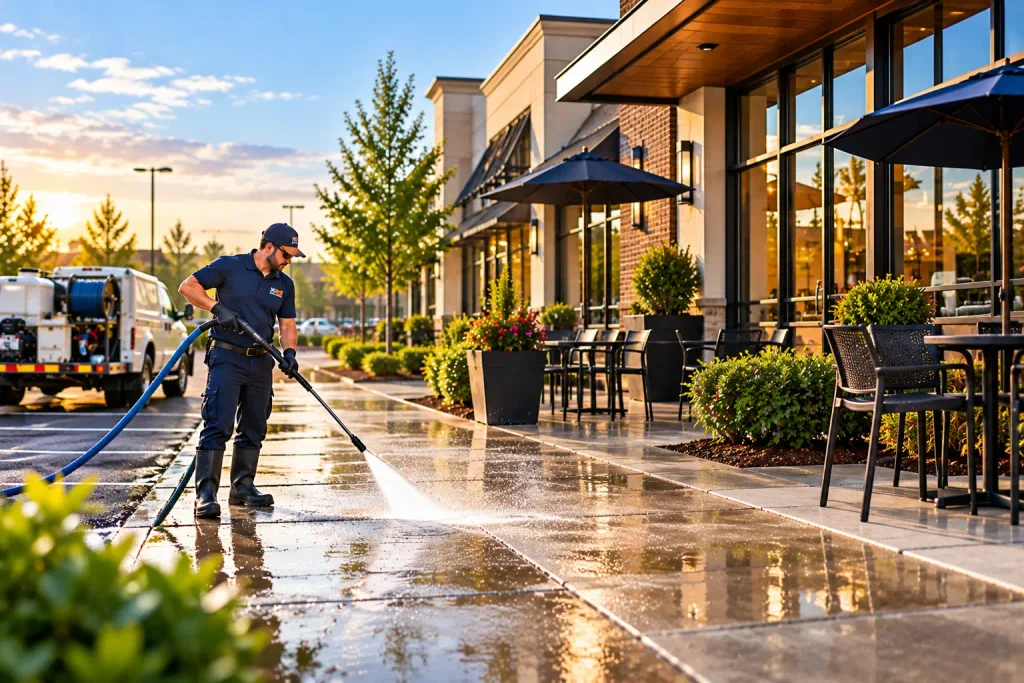
Most commercial sites do. A typical job might soft wash the facade, roofline, and signage, then pressure wash the entry walkways, loading area, and dumpster pad. Sequence matters, too. Working from the top down keeps runoff from re-soiling surfaces you’ve already cleaned.
If your property mixes materials, a commercial pressure washing provider can plan the order of work and assign the right method to each surface, instead of treating the whole site the same way.
What Commercial Exterior Cleaning Costs
Commercial pricing varies more than residential, and quotes are rarely a flat fee. Commonly cited national ranges run roughly $0.10 to $0.50 per square foot for building exteriors and around $0.08 to $0.25 per square foot for open flatwork such as parking lots. A single storefront wash often lands in the low hundreds to around $1,200, while large facilities and multi-story buildings are bid individually.
These figures are general estimates, not confirmed prices. The final cost depends on factors such as property size, surface material, how heavily soiled it is, access and equipment needs (lifts, fall protection), after-hours scheduling, runoff containment, cleaning frequency, and add-ons like degreasing. A written, itemized quote after a site assessment is the only reliable number.
Recurring schedules can sometimes lower the per-visit cost, so ask whether a maintenance plan is available.
Runoff, Safety, and Liability: Questions Worth Asking First
Method choice has consequences beyond how the building looks.
Wash water. Under the federal Clean Water Act and local stormwater ordinances, polluted wash water generally can’t be discharged to storm drains, and soft wash solutions and degreasers make that more important. Rules vary by city, so it’s worth confirming Cincinnati-area requirements with the city or the Metropolitan Sewer District. Ask any contractor how they capture or manage runoff.
Landscaping and surroundings. Cleaning solutions can harm plants. A careful crew pre-wets and rinses vegetation and protects drains and nearby surfaces.
Insurance and safety. Ask for proof of insurance. Lifts, ladders, and slippery surfaces create real risk, so find out who is responsible if something is damaged or someone is injured.
Tenants and customers. Soft washing doesn’t rely on high-pressure impact, so it can often be scheduled around occupied buildings. Still, tenants should be told when chemicals will be used, and walkways may need to be closed or signed.
How Often Commercial Properties Need Cleaning
There’s no universal schedule. Many property-maintenance guides suggest more frequent attention for dumpster pads, entryways, and food-service areas, and less for facades. Cincinnati’s humid summers and year-round precipitation encourage algae on shaded walls and damp loading areas, so these spots often show growth first. High-traffic sites and restaurant anchors usually need tighter schedules than quiet offices.
Choosing a Contractor
Look for specifics, not promises. Ask which method they’d use on each surface and why, how they manage runoff, what insurance they carry, and what’s included in a written scope. Be cautious of any company that proposes one method for everything.
KRS Pressure Washing lists commercial pressure washing among its services and serves Cincinnati and surrounding Northern Kentucky communities. As with any provider, ask for the details above before work begins.
Frequently Asked Questions
Is soft washing safer for commercial buildings?
For delicate surfaces like stucco, EIFS, painted finishes, and roofing, generally yes, because it avoids high-pressure impact. It still requires correct dilution, plant protection, and runoff control.
Can soft washing replace pressure washing on parking lots and dumpster pads?
Usually not on its own. Heavy oil, grease, and caked-on grime on concrete respond better to pressure, and sometimes hot water. Soft wash solutions can be used as a follow-up treatment.
Will exterior cleaning disrupt my business?
It can be kept to a minimum. Many jobs can be scheduled early, late, or around business hours, and ask about phasing so entrances stay open.
Next Step
The best cleaning method for commercial buildings is the one matched to each surface, with runoff and liability handled up front. If you manage a property and aren’t sure where soft washing ends and pressure washing begins, a site assessment will answer it. To discuss professional exterior cleaning in Cincinnati, OH, you can request a quote or call (859) 300-1586.