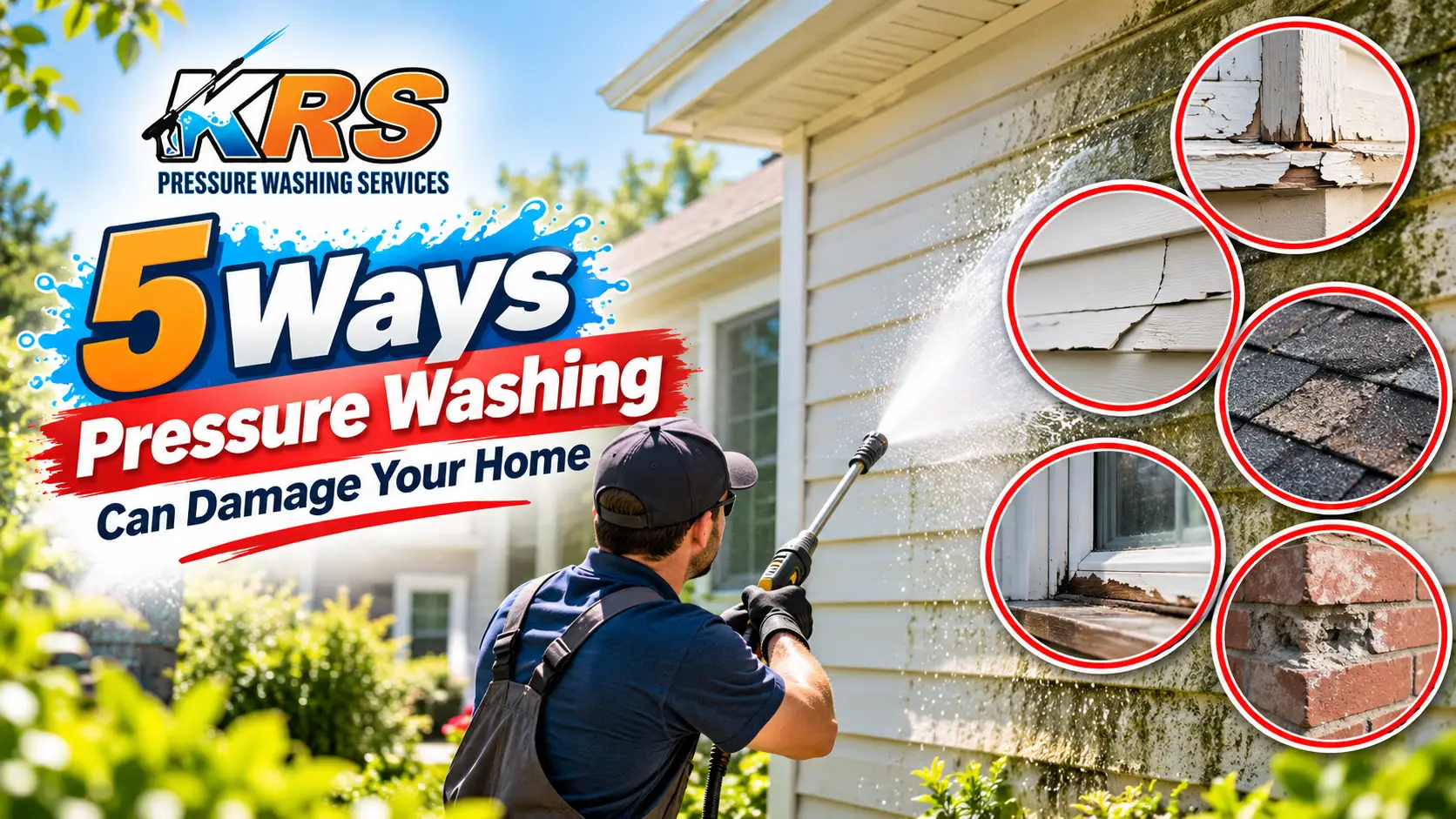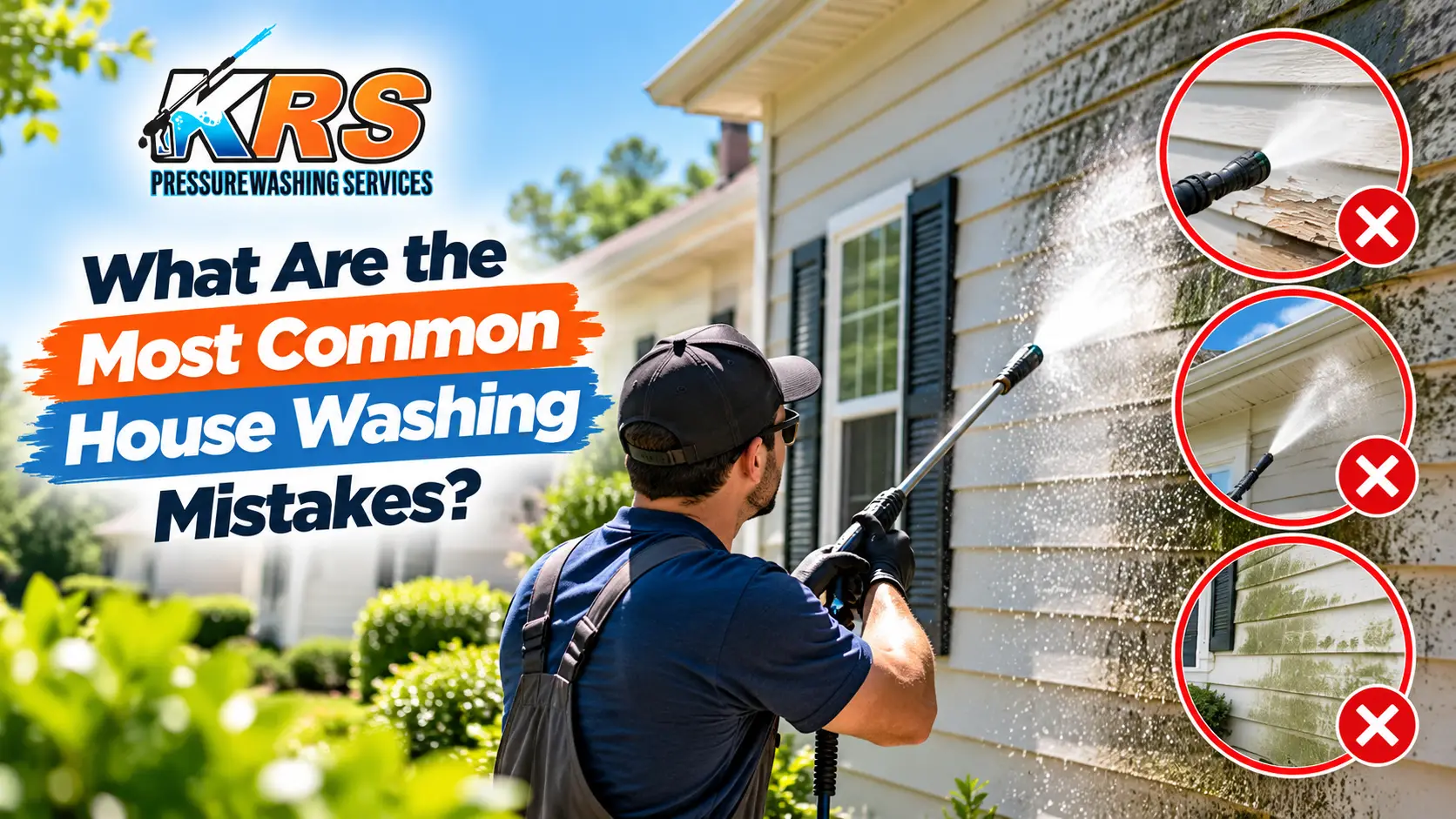
A dirty house is easy to spot, but a damaged one often isn’t. The common house washing mistakes below tend to look fine on wash day and show up months later as stained siding, soft wall sections, or water where it shouldn’t be. Most come down to too much force, the wrong chemistry, or skipping the prep that keeps water and cleaner where they belong.
This guide covers the nine errors that cause the most trouble, explains why each one hurts, and shows how to avoid it. It closes with a practical way to decide between doing the work yourself and hiring a pro.
Why a House Is Easier to Damage Than It Looks
An exterior wall is a layered system. Siding sheds most of the rain, while the house wrap, flashing, and drainage gaps behind it deal with the rest. House washing problems usually start when a spray defeats those layers and pushes water or cleaner into places that dry slowly.
Local conditions add pressure to act. Cincinnati summers are typically hot and humid, and rainfall is spread across the year, so algae and mildew return quickly on shaded walls. That regrowth tempts many homeowners to reach for a stronger nozzle, which is how pressure washing damage often begins.
The Most Common House Washing Mistakes
1. Using too much pressure or the wrong nozzle
Typical pressure washers deliver roughly 1,300 to 2,800 PSI, while soft washing generally runs well under 500. A house rarely needs the upper end of that range. Excessive pressure can crack older or cold vinyl, gouge wood, strip paint, and blow caulk out of joints.
The wrong nozzle makes it worse. A zero-degree tip (usually red) concentrates the stream into a cutting jet. Safety guidance consistently recommends a wide-angle fan tip instead. Start at the lowest setting, test a hidden spot, and stay back until the cleaning works without stress on the surface.
2. Spraying upward and forcing water behind the siding
Siding panels overlap, and spraying up or against those laps drives water intrusion behind them. The water soaks the house wrap and sheathing and can sit there, feeding mold or rot. This is one of the most frequent siding cleaning mistakes, and the damage stays hidden.
Spray downward, in line with the laps, from a reasonable distance. Check the siding maker’s care instructions first, too. Some manufacturers advise against pressure washing, others allow limited pressure, and using a method they prohibit can affect a warranty.
3. Skipping the inspection before you start
Cracks, loose panels, failing caulk, and worn window seals are all entry points. Wash over them and water goes straight into the wall. Repair first, or at least avoid those areas.
Walk the house for fragile and electrical spots too. Direct spray can crack windows with weak glazing and force water into outdoor outlets, light fixtures, and the meter or service entrance. Electrical hazards are easy to prevent here: keep the stream away from them and don’t wash near overhead service lines.
4. Using the wrong cleaning solution, or the wrong strength
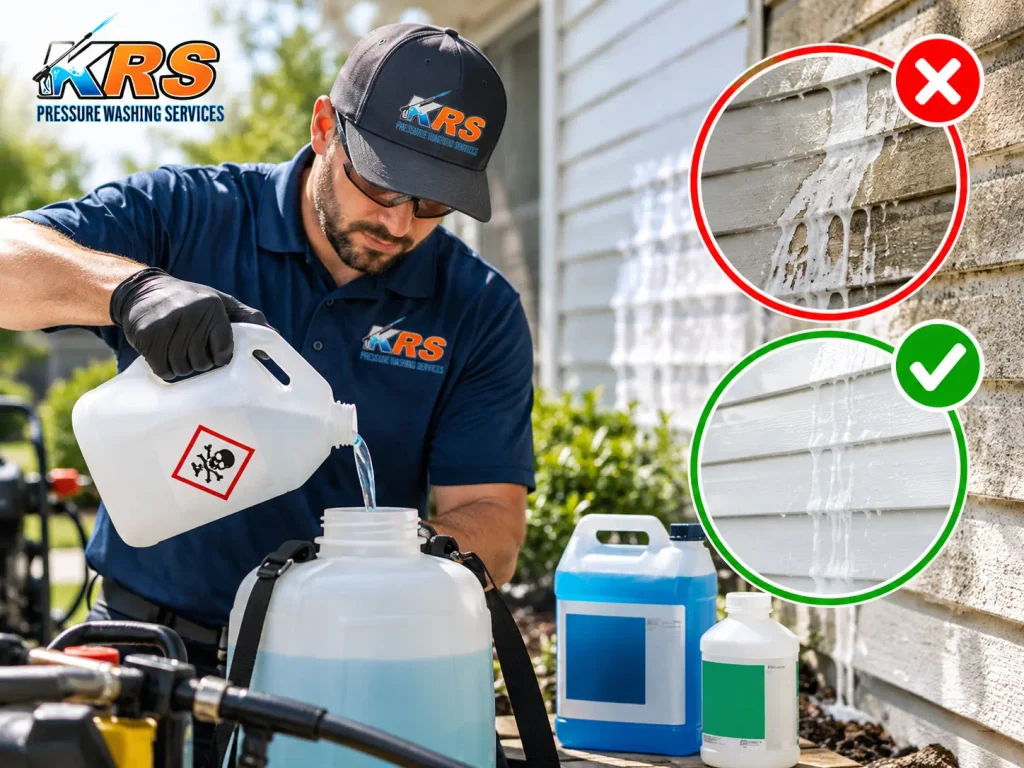
A product that suits vinyl can harm wood or painted surfaces, so surface compatibility matters. Professionals commonly use diluted sodium hypochlorite with a surfactant for mold and algae, and even then it can react with the pigment in some paints, so a patch test comes first.
Common improper house washing habits include mixing a stronger batch “to speed things up” and combining products. Bleach shouldn’t be mixed with other cleaners, ammonia-based ones especially, because toxic gases can form. Follow the label, and when in doubt go weaker and repeat.
5. Forgetting the plants and landscaping
Sodium hypochlorite is a biocide, so it kills vegetation on contact. Runoff over a bed of shrubs can leave brown, burned foliage within days. Wet nearby plants thoroughly before any cleaner touches the wall, cover delicate ones, and rinse them again afterward. Direct runoff toward lawn or gravel instead of garden beds or storm drains.
6. Rinsing too little, or letting solution dry
Insufficient rinsing leaves residue, streaks, and film that attract dirt. Cleaner also streaks if it’s applied to dry siding from the top down, so many professionals apply from the bottom up and rinse from the top down. Work in manageable sections so nothing dries before it’s rinsed, and don’t forget sills, window tracks, and the area behind downspouts.
7. Blasting algae when a gentler method fits
Green and black growth on a Cincinnati house is organic, and organic growth responds better to chemistry than to force. Pressure can strip the surface layer while leaving roots behind, so the stain returns fast. Soft washing is designed to treat the growth itself at low pressure. The most common soft washing mistakes are the reverse, such as skipping dwell time or guessing at dilution. How that process works is covered in this explanation of removing mold and algae with pressure washing.
Shade explains why the north side of many houses greens up first. It dries slowest, and tree sap and dust provide food, so growth there is normal and not a sign that earlier cleaning failed.
8. Treating safety as optional
House washing safety mistakes cause real injuries. CPSC data cited by insurers and safety groups point to thousands of pressure washer injuries and emergency room visits each year, from falls, electric shock, and the stream itself.
- Avoid working from a ladder. Wand recoil can push you off. Use an extension wand or a long-reach tool instead.
- Plug electric units into a GFCI-protected outlet, and keep cords out of standing water.
- Wear goggles, gloves, and non-slip footwear, and never point the nozzle at people, pets, or your own boots.
- Check the CPSC recall list before using an inexpensive electric unit. The agency has issued several 2026 warnings and recalls over shock and electrocution hazards, including units without GFCI protection.
9. Washing a pre-1978 house without thinking about lead paint
The EPA reports that roughly three-quarters of US homes built before 1978 still contain some lead-based paint. Blasting off peeling paint can scatter chips and contaminated dust across soil, gardens, and play areas.
EPA’s lead-safe work rule applies to paid contractors who disturb paint in pre-1978 homes, and it generally doesn’t cover homeowners working on their own house, though EPA still recommends lead-safe practices. Some states restrict or discourage pressure washing on these homes, so check current local and state rules, and avoid washing flaking paint with force.
DIY or Professional? How to Decide
When DIY is realistic
A one-story house with sound, modern siding and light surface dirt can often be handled with a garden hose, a siding-safe cleaner, and a soft brush. That approach avoids most of the mistakes above, because there’s no high pressure to misdirect.
When to hire a professional
Bring in help for two-story homes, heavy growth, peeling or older paint, stucco, mixed materials, or walls close to the electrical service. Professional house washing also removes the ladder risk. KRS Pressure Washing serves Cincinnati and communities across Northern Kentucky, and whichever company you choose, the method should match your siding and not the other way around.
Questions to ask before hiring
Ask how the crew decides between soft washing and pressure, how they protect plants and electrical fixtures, and whether they’re insured. This list of questions to ask a house washing contractor covers the rest, and a clear, specific answer is a good sign.
Frequently Asked Questions
Is it safe to pressure wash vinyl siding?
Sometimes. Some manufacturers prohibit it, others allow low pressure with the right tip, angle, and distance. Soft washing or hand washing is the lower-risk path, and a house washing service that matches the method to the material takes the guesswork out.
Can soft washing damage paint?
It can, mainly when the mix is too strong or reacts with certain pigments. A patch test in an inconspicuous spot and a proper dilution reduce that risk.
How can I tell if water got behind my siding?
Warning signs include stains that appear after washing, soft or swollen areas, efflorescence on masonry, and musty smells or water marks inside near exterior walls. If any show up, have the wall inspected before the moisture has time to cause rot.
Next Step
Most house washing damage is preventable with lower pressure, a downward spray angle, the right cleaner, and a quick walk-around before starting. If your house has heavy growth, older paint, or two stories, you can request a house washing quote or call (859) 300-1586 to talk through the safest approach.