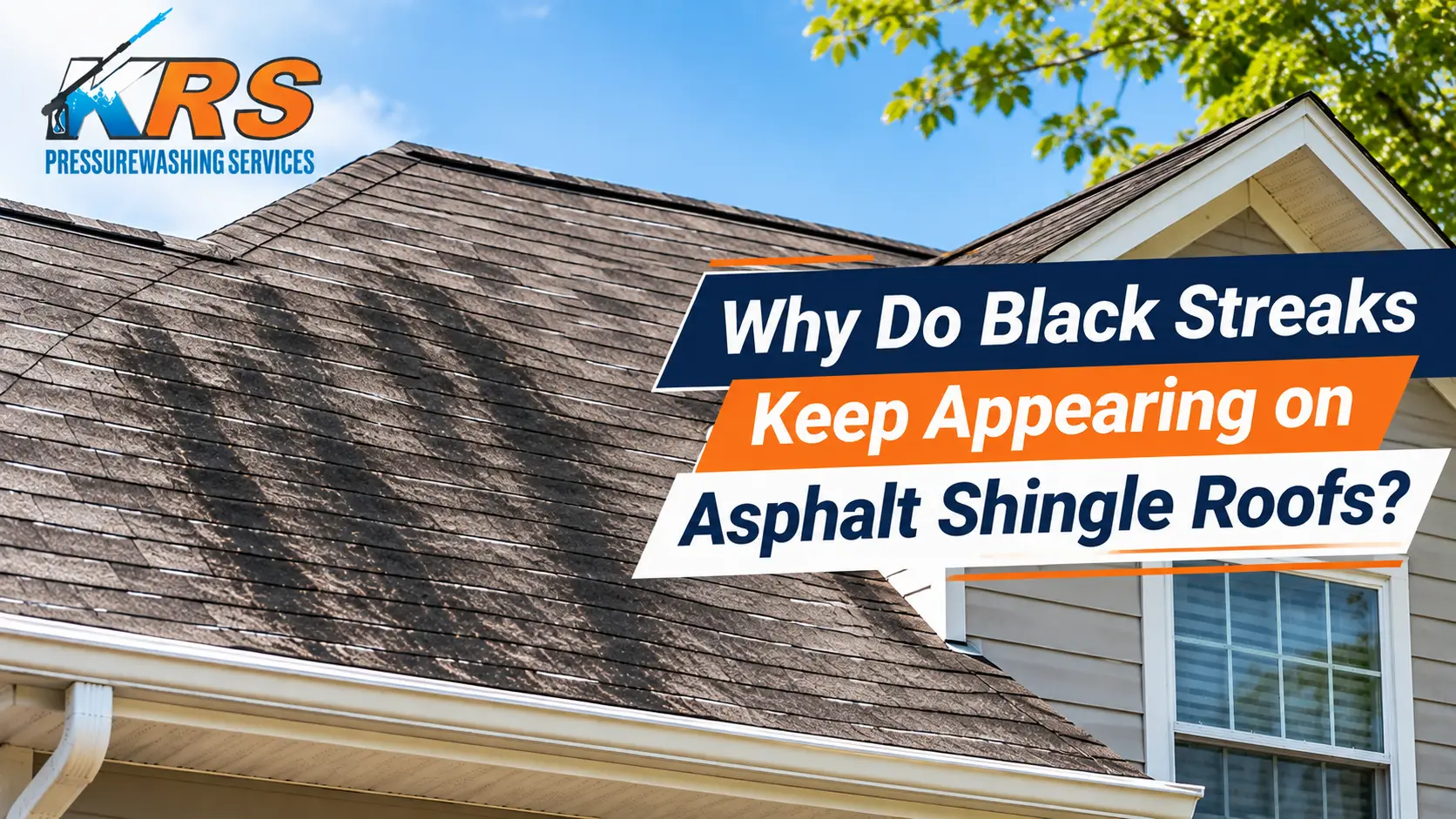
Black streaks on asphalt shingles usually develop when roof-dwelling microorganisms grow on the surface. A common cause is Gloeocapsa magma, a type of cyanobacteria often called blue-green algae. Its dark protective pigment creates the staining homeowners notice from the driveway.
The streaks can return because cleaning removes or reduces existing growth without permanently changing the conditions that support it. Shade, lingering moisture, and fresh exposure to airborne organisms can allow another colony to develop.
That does not automatically mean the shingles are failing. Understanding the difference between surface staining and roof damage helps you choose the right next step without paying for unnecessary work or using a cleaning method that harms the roof.
What Makes Roof Algae Look Like Black Streaks?
Despite the name “blue-green algae,” this growth often looks brown or black on shingles. The organisms produce a dark-pigmented covering that protects them from sunlight. As growth becomes more visible, homeowners may notice scattered patches, broad discoloration, or dark lines across a roof slope.
The staining can exist before it becomes obvious from the ground. A roof that suddenly looks dirty may have supported growth for some time. CertainTeed describes this delay between algae becoming established and visible black streaking appearing.
Gloeocapsa magma roof stains are not the same as soot, ordinary dust, or proof of mold inside the house. Calling every dark roof mark “black mold” skips an important identification step.
Shingle color also affects what you see. Streaks may stand out sharply on a pale roof while being harder to notice on darker shingles. A dark-colored roof is not necessarily free of algae simply because its surface looks more uniform.
Why the Streaks Return After Cleaning
Recurring black roof streaks do not have one universal explanation. The timing and location of the discoloration help separate new growth from staining that never fully cleared.
The Roof Still Offers Conditions for Growth
Cleaning does not remove nearby shade or change how quickly a roof section dries. Organisms can reach the surface again, and damp conditions can support renewed growth.
Roof slope orientation matters because different sides receive different amounts of sunlight. Overhanging branches can add shade and leave debris behind. The useful comparison is between sections of your own roof: which stays shaded, collects leaves, or remains damp longer?
ARMA notes that roof algae can spread between roofs and that moisture favors its development. Cleaning therefore should not be described as permanent protection against future colonization.
Some Discoloration May Remain After Treatment
A roof that never became evenly clean presents a different question from one that stayed clear and gradually darkened again. Extensive staining may need reassessment or an additional manufacturer-approved treatment.
Owens Corning explains that cleaning can be temporary and that extensive algae growth may require repeat treatment. That does not justify automatically applying a stronger solution or using more pressure.
Keep before-and-after photographs taken from the same ground-level location. Record the cleaning date and when you first notice changes. Those details help the contractor assess the result without relying on memory.
Does Algae Mean the Roof Is Being Damaged?
Roof algae stains are generally an appearance concern. ARMA states that scientific evidence has not established algae as damaging to asphalt shingles. Owens Corning likewise reports no evidence that algae deposits affect shingle performance.
Avoid assuming that black streaks mean organisms are eating through the roof or that replacement is immediately necessary. Equally, a stained roof can have separate defects that deserve attention.
Moss is a different concern. Its raised growth can hold moisture and interfere with shingle edges. ARMA distinguishes moss from algae because substantial moss growth can lift or curl shingles and affect water movement.
| Observation | What It Means for the Next Step |
|---|---|
| Flat dark streaks without visible shingle distortion | Arrange an assessment of the staining and cleaning suitability |
| Raised green growth around shingle edges | Ask for identification and a manufacturer-compatible removal plan |
| Missing shingles, curled edges, or obvious surface deterioration | Have a roofer assess the condition before cleaning |
| Ceiling stains or an active indoor leak | Investigate the leak rather than treating exterior cleaning as the repair |
These are starting points, not a roof diagnosis from the driveway. Cleaning cannot replace missing material, repair flashing, or correct a damaged roof deck.
Check the Pattern Before Booking Roof Cleaning
Start with photographs from the ground. Use a camera zoom or binoculars if needed, but do not climb onto the roof to inspect a stain.
Look at the entire slope rather than one close-up. Note if the marks cover a broad section, sit beneath a tree, or begin around a particular roof feature. A localized mark may need a different explanation from widespread biological roof staining.
For a Burlington or Northern Kentucky property, give the contractor information about the actual roof: its approximate age, previous cleaning, known leaks, and any available shingle paperwork. Those details are more useful than assuming every dark roof in the region has the same problem.
KRS Pressure Washing lists roof cleaning among its services. When requesting an assessment, explain whether the discoloration is new or returning after previous work.
A practical record should include:
- The approximate date the streaks first became noticeable.
- Which roof sections are affected.
- Any earlier cleaning method or invoice.
- Visible damage or indoor moisture concerns.
- The shingle manufacturer, if known.
Ask the contractor to explain the likely cause before agreeing to treatment. “The roof looks dirty” is not a sufficient assessment when several kinds of staining or deterioration may be present.
How Should Asphalt Shingles Be Cleaned?
The cleaning method should follow the shingle manufacturer’s current instructions. Low-pressure roof cleaning uses an appropriate treatment to address staining without relying on forceful water pressure to strip it away.
ARMA advises against power washing and against using brushes or brooms to clean algae from asphalt shingles. Scrubbing and high pressure can remove protective granules. Its guidance also says cleaning chemistry can vary by manufacturer, so one mixture should not be assumed suitable for every roof.
“Soft Washing” Should Describe a Specific Process
The phrase soft washing asphalt shingles is useful only when the contractor explains what it means for your roof. Ask about the cleaning solution, application method, required contact time, and rinsing procedure.
A low-pressure application does not make every chemical suitable. Likewise, a product labeled for exterior cleaning is not automatically approved for asphalt shingles.
A professional roof cleaning assessment should establish the roof’s condition and the appropriate method before treatment begins. Ask how the crew will protect landscaping, manage roof runoff, and avoid unnecessary foot traffic.
Wet roofing can be slippery, and cleaning adds chemical-handling and access risks. Treat this as a job requiring a clear work plan, especially on steep or difficult-to-reach roof sections.
Protecting Granules Matters More Than an Instant Result
An aggressive cleaning pass can make a surface look different while removing material that should remain on the shingles. GAF specifically warns that power washing can dislodge granules and contribute to premature shingle failure.
Do not approve scraping, hard brushing, or a stronger spray merely because a stain remains visible. Ask whether another assessment or approved treatment is appropriate. Some marks may not be algae, and cleaning cannot restore granules that have already been lost.
What Should You Ask a Roof Cleaning Contractor?
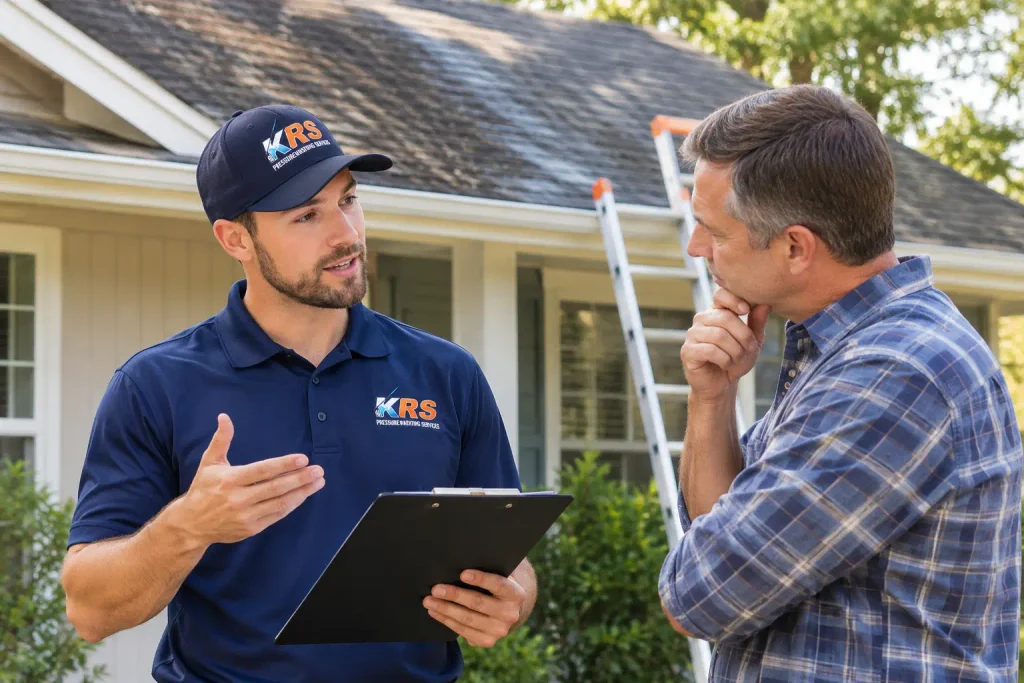
Ask for an explanation that connects the roof condition to the proposed work. A useful answer should address more than price and the appearance of previous projects.
These questions help establish the scope:
- What do you believe is causing these marks? Ask the contractor to distinguish suspected algae from moss, debris staining, or deterioration.
- Which manufacturer guidance applies? Provide any shingle records you have and ask how the proposed method matches them.
- How will you protect the property? Discuss plants, siding, gutters, and where treatment runoff will go.
- What result should be expected? Clarify what may remain visible and when the work should be reviewed.
- What happens if staining persists? Get the follow-up procedure and any written coverage terms before work begins.
If the project also includes siding, the questions to ask a house washing contractor can help organize that discussion. Keep the roof-specific cleaning method separately identified in the quote.
Request a written scope after the contractor assesses the roof. It should name the surfaces included, any exclusions, and the proposed treatment. Roof size, pitch, access, and the extent of growth can affect the work, so a driveway or siding price is not a reliable substitute for a roof-cleaning quote.
How Can You Reduce Future Roof Algae Buildup?
Start with conditions that can reasonably be managed. Arrange appropriate removal of accumulated roof debris and keep drainage paths maintained. Have overhanging branches evaluated for suitable pruning rather than attempting overhead work from a ladder.
These actions can help manage shade and moisture retention, but they cannot guarantee a stain-free roof. Avoid buying a fixed cleaning schedule without considering the roof’s condition and the manufacturer’s recommendations.
Take periodic photographs from the same position. Comparing dry-roof images under similar lighting makes gradual changes easier to judge. If discoloration returns, send those photographs to the contractor before authorizing another treatment.
Are Algae-Resistant Shingles Worth Considering?
When replacement is otherwise necessary, algae-resistant shingles are worth discussing with a roofer. Some products incorporate metals such as copper into their granules to inhibit growth.
Read the specific product warranty. Algae resistance does not mean protection against every type of organic growth, and coverage can differ between shingle lines. Do not replace a serviceable roof solely because cleaning offers temporary results.
Metal strips are another option sometimes discussed for algae control. IKO describes how metal ions carried down a roof can inhibit growth. Their suitability and installation should be evaluated for the particular roofing system rather than treated as a universal homeowner fix.
Common Questions About Black Roof Streaks
Why Are There Clean Strips Below Some Metal Roof Features?
Certain metals can inhibit algae as weathering releases metal ions that move down the roof with water. That can leave less-stained sections below metal features. The pattern may support an algae assessment, but it does not confirm the roof’s overall condition.
Does Rain Wash Roof Algae Away?
Rain alone should not be treated as a dependable algae-removal method. Manufacturer guidance describes controlled cleaning treatments. Noticing streaks after rain also does not prove that the growth developed during that storm.
Do Black Streaks Prove There Is Mold in the Attic?
No. Exterior shingle discoloration does not establish an attic mold problem. Indoor moisture, ventilation concerns, or roof leaks require their own investigation.
Should a Roof Be Cleaned Before Selling the House?
An assessment can help determine whether cleaning would improve its appearance. Address known defects separately and keep records of both cleaning and repairs. A cleaner-looking roof should not be presented as evidence that it has been repaired or certified.
Choose a Cleaning Plan That Fits the Roof
Black streaks on asphalt shingles often return because the roof remains exposed to the conditions that support algae growth. The right response starts with identifying the staining, checking for separate defects, and choosing a manufacturer-compatible cleaning method.
For a roof cleaning assessment in Burlington or Northern Kentucky, contact KRS Pressure Washing at (859) 300-1586. Share photographs and any previous cleaning records so the discussion starts with the condition of your roof.